
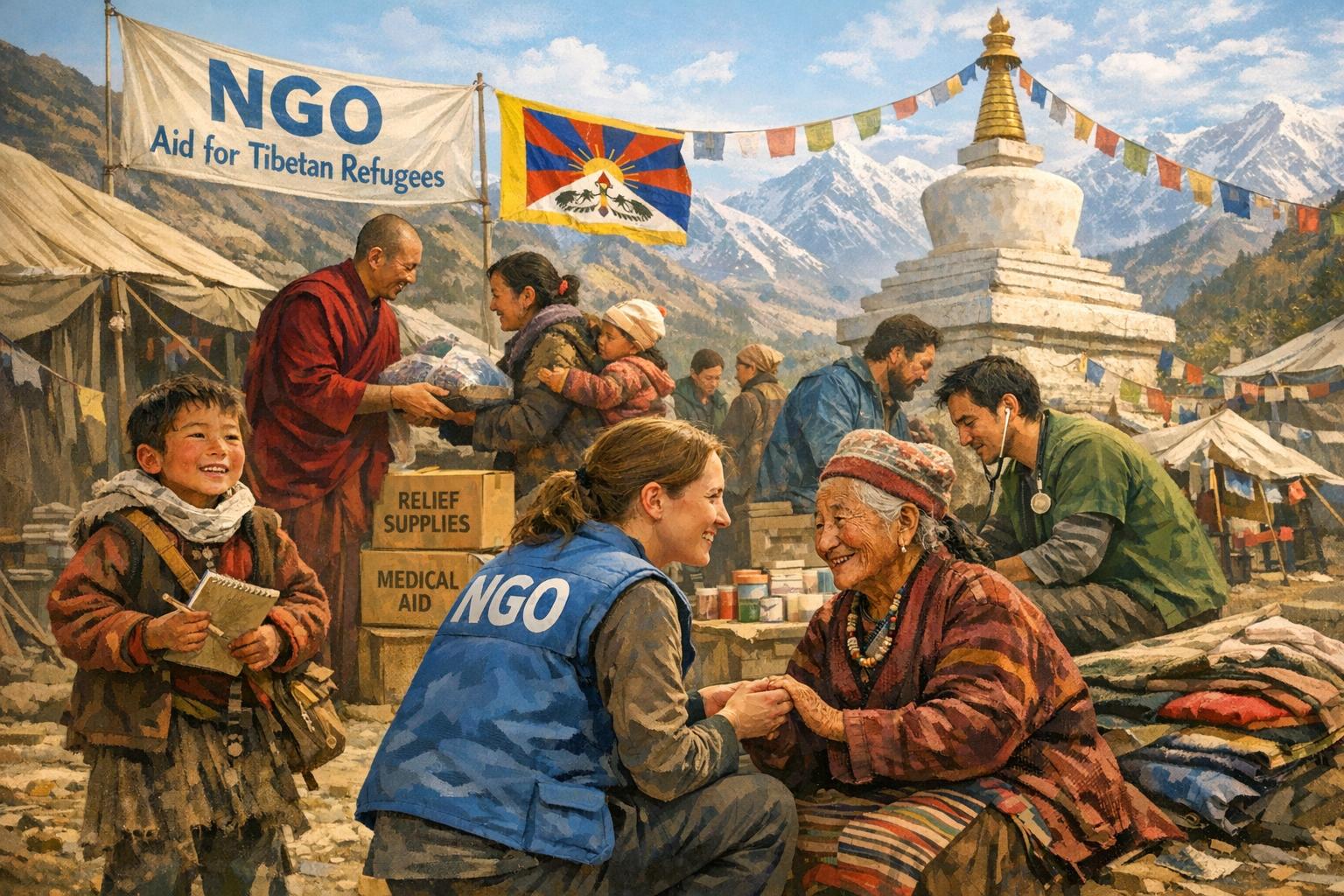
The Role of NGOs in Supporting Tibetan Refugees
Non-governmental organizations (NGOs) have played a sustained and multifaceted role in supporting Tibetan refugees since large-scale displacement began in the mid-twentieth century. Following the political changes in Tibet after 1950, thousands of Tibetans sought refuge in neighboring countries, particularly India and Nepal. Over time, this displacement evolved into a long-term humanitarian situation requiring organized assistance across multiple sectors. NGOs have contributed by addressing immediate survival needs while also supporting long-term community development, cultural preservation, and institutional resilience.
The involvement of NGOs has often complemented the efforts of host governments and international bodies. Their flexibility, capacity for targeted programming, and close engagement with local communities have allowed them to respond to gaps that larger institutions may not efficiently address. As a result, NGOs have become central actors in improving living conditions and advancing opportunities for Tibetan refugees across generations.
Educational Support
Education has remained a cornerstone of NGO involvement in Tibetan refugee communities. Early interventions focused on establishing basic schooling infrastructure for children who had limited or disrupted access to formal education. Over time, these initiatives expanded into structured educational systems, including primary and secondary schools designed specifically to serve Tibetan populations.
A significant aspect of these educational programs is the integration of cultural and linguistic preservation alongside standard academic curricula. NGOs have supported the development of Tibetan-language instruction, cultural studies, and religious education where appropriate, ensuring that younger generations maintain a connection to their heritage even while living in exile. This dual approach addresses both immediate educational needs and broader concerns about cultural continuity.
In addition to basic education, NGOs have facilitated scholarship programs that allow Tibetan students to pursue higher education in universities both within host countries and abroad. These opportunities have contributed to the development of a professional class within the refugee community, including teachers, healthcare workers, and administrators who often return to serve their communities. Teacher training programs have also been supported, improving education quality and sustainability within Tibetan schools.
Non-formal education has further expanded the reach of NGO programs. Adult literacy initiatives, vocational education, and community-based learning centers have helped individuals who may have missed formal schooling opportunities. These efforts ensure that education is not limited to children but remains accessible throughout the community.
Health and Medical Services
Healthcare provision has been another major area of NGO engagement, particularly due to the geographic distribution of Tibetan refugee settlements, many of which are located in remote or resource-constrained regions. NGOs have established clinics, supported hospitals, and operated mobile health units to address both acute and chronic health issues.
Primary healthcare services often include immunization programs, maternal and child health care, and treatment of common illnesses. Preventative care has been emphasized through health education campaigns focusing on hygiene, nutrition, and early detection of disease. These initiatives are particularly important in densely populated settlements where communicable diseases can spread rapidly.
Mental health has become an increasingly recognized area of need. The experience of displacement, combined with ongoing political uncertainty and economic challenges, has contributed to stress and psychological strain within refugee communities. NGOs have begun to incorporate mental health services into their programs, including counseling, community support groups, and training for local health workers in basic psychological care.
Some organizations also support the integration of traditional Tibetan medicine with modern healthcare practices. Clinics offering traditional treatments operate alongside allopathic services, providing culturally familiar care options while ensuring access to evidence-based medical treatment. This combined approach helps increase trust in healthcare systems and improves overall community engagement.
Infrastructure development has complemented service delivery. NGOs have contributed to building medical facilities, supplying equipment, and training healthcare personnel from within the refugee population. These investments enhance long-term sustainability and reduce reliance on external providers.
Advocacy and Political Support
Beyond service provision, NGOs play a significant role in advocacy related to the rights and conditions of Tibetan refugees. These efforts operate on multiple levels, including international awareness campaigns, policy engagement, and support for Tibetan representation in global forums.
Advocacy initiatives aim to bring attention to issues such as cultural preservation, human rights, and the legal status of refugees. NGOs often work to document conditions, produce reports, and engage with media organizations to ensure that Tibetan concerns remain visible in international discourse. Public events, conferences, and educational outreach programs are commonly used to inform broader audiences.
Policy engagement is another key dimension. NGOs may collaborate with governments and international institutions to influence policies affecting refugee rights, including access to education, healthcare, and employment. In some cases, they assist in navigating legal frameworks related to residency, citizenship, or travel documentation for Tibetan refugees living in host countries.
Support for Tibetan-led institutions is also central to advocacy efforts. NGOs often provide technical and financial assistance to organizations within the Tibetan community, helping them develop governance capacity and participate more effectively in decision-making processes. This approach emphasizes not only external advocacy but also internal empowerment.
While advocacy activities are shaped by political sensitivities, NGOs generally operate within a framework focused on human rights, humanitarian principles, and cultural preservation. Their efforts contribute to maintaining international engagement with Tibetan issues even as geopolitical priorities shift.
Economic Development Initiatives
Economic stability remains a significant concern for many Tibetan refugees, particularly in settlements where opportunities are limited. NGOs have addressed this challenge through a range of economic development programs aimed at increasing self-sufficiency and reducing dependency on aid.
Vocational training programs are a central component of these efforts. Training is often tailored to local market conditions and may include skills such as carpentry, tailoring, agriculture, handicrafts, or service-sector work. These programs are designed to provide practical, income-generating skills that can be applied within or beyond refugee settlements.
Microfinance and small-business support have also gained importance. NGOs may offer small loans, grants, or business training to help individuals start or expand enterprises. These initiatives encourage entrepreneurship and create local economic activity, contributing to broader community development.
Agricultural development programs are particularly relevant in settlements with access to land. Support may include training in sustainable farming practices, provision of tools and seeds, and assistance with irrigation systems. Improving agricultural productivity helps ensure food security while also generating income through surplus production.
Women’s economic participation has been a specific focus within many NGO programs. By supporting women’s cooperatives, skill development, and access to financial resources, these initiatives aim to increase household income and promote greater gender equity within the community.
Efforts to connect refugee economies with external markets have also been explored. NGOs may assist with marketing traditional Tibetan products, improving quality standards, and facilitating distribution channels. This not only supports livelihoods but also reinforces cultural expression through economic activities.
Overall, economic programs are designed with sustainability in mind. Rather than providing short-term assistance, NGOs increasingly emphasize capacity-building and long-term resilience. This approach aligns with broader goals of enabling Tibetan refugees to maintain stable and independent livelihoods while preserving their cultural identity.
Through coordinated efforts in education, healthcare, advocacy, and economic development, NGOs continue to play a central role in supporting Tibetan refugees. Their work addresses immediate humanitarian needs while also contributing to long-term community stability and cultural continuity.