The role of art and literature in preserving Tibetan identity.

The Role of Art in Preserving Tibetan Identity

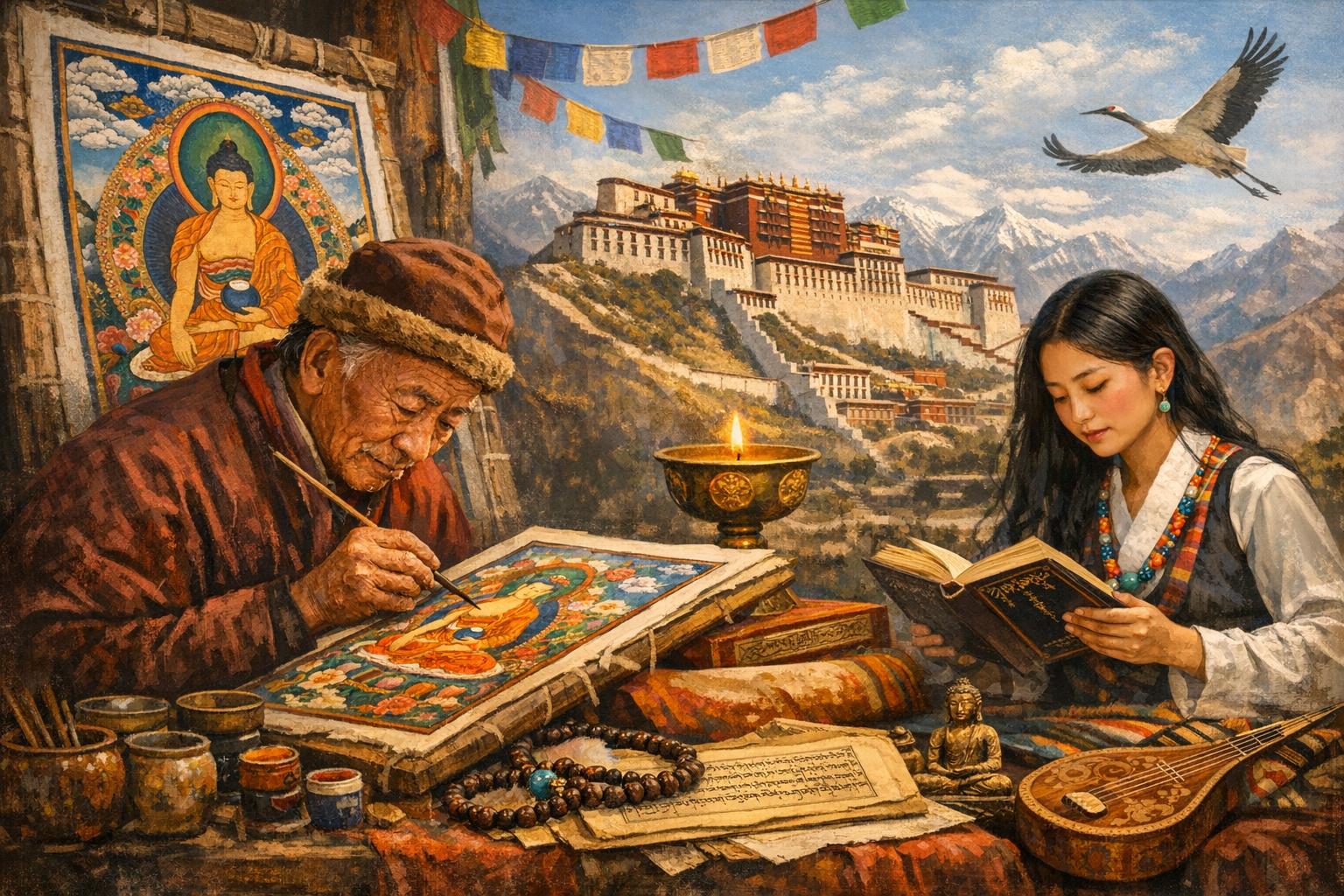
Tibetan art functions as a primary vehicle for expressing and maintaining cultural and religious identity. Rooted in Tibetan Buddhism, artistic traditions integrate symbolism, ritual, and craftsmanship into forms that communicate shared values and historical continuity. These works are not created solely for aesthetic appreciation; they are embedded within daily and ceremonial life, reinforcing collective memory and belief systems. From monastery murals to portable objects used in private homes, Tibetan art provides both visual narratives and instructional frameworks that sustain cultural knowledge across generations.

Art in Tibet has historically been shaped by religious institutions, which have acted as centers for artistic production and training. Monasteries often served as workshops where artists learned standardized iconography and methods. This institutional structure ensured consistency in visual language, allowing viewers to interpret symbols and figures with a shared understanding. The result is a cohesive artistic tradition that maintains continuity even as it evolves.

Thangka Paintings

Thangka paintings represent one of the most recognizable forms of Tibetan art. These scroll paintings are typically created on cotton or silk and are designed to be portable, allowing them to be rolled and transported for teaching or ritual use. The content of thangkas is highly structured, depicting Buddhist deities, historical figures, cosmological diagrams, or mandalas according to precise guidelines.

The creation of a thangka involves careful preparation and adherence to symbolic proportions. Artists follow detailed instructions regarding posture, color, and composition, ensuring that each element conveys specific meanings. For example, colors are not chosen arbitrarily but correspond to particular qualities or aspects of enlightenment. This precision allows thangkas to serve as tools for meditation, where practitioners focus on visual details to deepen their understanding of Buddhist teachings.

Beyond their ritual function, thangkas also act as educational instruments. They provide visual representations of complex philosophical concepts that might otherwise remain abstract. In both monastic and domestic settings, these artworks help communicate religious narratives and ethical principles, reinforcing shared beliefs within the community.

Sculpture and Mandalas

In addition to paintings, Tibetan art includes a wide range of sculptural forms. Statues of deities and spiritual teachers are commonly found in temples and homes, often crafted from materials such as bronze, clay, or wood. These sculptures are not merely decorative objects; they are treated as vessels that embody spiritual presence. Ritual practices such as offerings and prayers are conducted in relation to these figures, integrating art directly into religious life.

Mandalas represent another important artistic form, characterized by geometric arrangements that symbolize the universe in Buddhist cosmology. Created using materials ranging from paint to colored sand, mandalas illustrate the structure of spiritual realms and the path toward enlightenment. Sand mandalas, in particular, emphasize impermanence, as they are carefully dismantled after completion. This process reinforces key philosophical teachings while also demonstrating the technical skill and discipline required of the कलाकार.

Together, sculpture and mandalas expand the scope of Tibetan art beyond two-dimensional representation, offering immersive and interactive experiences that support both contemplation and ritual practice.

The Communal Nature of Artistic Transmission

A defining feature of Tibetan art is its communal method of transmission. Skills and knowledge are passed down through apprenticeships, where experienced artists train students in both technique and symbolic interpretation. This educational model prioritizes continuity over individual innovation, ensuring that artistic standards remain aligned with established traditions.

The transmission process extends beyond technical instruction. It includes the teaching of धार्मिक principles, cultural values, and historical context, all of which inform artistic production. In this way, learning art becomes a comprehensive engagement with Tibetan identity itself.

Tibetan communities in exile have continued this tradition by establishing cultural centers and schools dedicated to preserving artistic practices. These institutions play a critical role in maintaining continuity under changing circumstances, providing structured environments where younger generations can learn skills that might otherwise decline.

The Influence of Literature on Tibetan Identity

Literature complements visual art by preserving linguistic, philosophical, and historical dimensions of Tibetan culture. It encompasses both written texts and oral traditions, each contributing to the continuity of knowledge and identity. Tibetan literature has historically been closely linked to religious study, with monasteries functioning as centers for textual preservation and interpretation.

Religious texts, including the Tibetan Buddhist canon, hold a central place in this literary tradition. These writings contain teachings attributed to the Buddha as well as commentaries by Tibetan scholars. They provide a framework for understanding ethical conduct, metaphysics, and spiritual practice. The study and recitation of these texts reinforce shared values and contribute to cultural cohesion.

Oral traditions remain equally significant. Stories, proverbs, and songs are transmitted through spoken language, often in communal settings. These narratives encode historical experiences, social norms, and moral lessons. Because oral traditions can adapt to changing circumstances, they serve as flexible tools for maintaining identity even in contexts where written materials are less accessible.

The Modern Landscape of Tibetan Art and Literature

Contemporary developments have introduced new forms and platforms for Tibetan cultural expression. Artists and writers are increasingly engaging with digital media, film, and print publishing to reach broader audiences. While traditional themes and symbols remain central, these mediums allow for the exploration of modern experiences, including migration, identity negotiation, and cultural preservation.

Digitization projects have become an important aspect of cultural conservation. Ancient manuscripts, artworks, and archival materials are being converted into digital formats, enabling wider access and reducing the risk of loss. These efforts often involve collaboration between Tibetan organizations and international institutions, reflecting a shared recognition of the importance of preserving cultural heritage.

At the same time, contemporary creators are contributing new perspectives to Tibetan art and literature. By incorporating modern techniques and themes, they expand the scope of cultural expression while maintaining connections to traditional foundations. This balance between continuity and adaptation is a defining feature of the current cultural landscape.

Challenges and Opportunities

The preservation of Tibetan art and literature faces a range of challenges. Political constraints, economic limitations, and the pressures of globalization can affect the transmission of cultural practices. In some cases, younger generations may have limited access to traditional forms of education, reducing opportunities to learn established techniques and narratives.

However, these challenges are accompanied by opportunities for innovation. Increased global interest in Tibetan culture has created platforms for cultural exchange and support. Exhibitions, publications, and digital initiatives allow Tibetan artists and writers to present their work to international audiences, raising awareness and fostering appreciation.

Technological tools also provide new methods for documentation and teaching. Online resources, virtual exhibitions, and digital archives can supplement traditional forms of instruction, ensuring that knowledge remains accessible even in dispersed communities.

Continuity Through Expression

Art and literature together form a comprehensive system for preserving Tibetan identity. Visual forms communicate symbolic and religious meanings, while literary traditions convey language, philosophy, and narrative history. Both rely on processes of transmission that emphasize continuity, community involvement, and adaptation.

Through ongoing practice and innovation, Tibetan art and literature continue to sustain cultural identity across different contexts. They remain central to the ways in which Tibetan communities understand their past, engage with the present, and plan for the future.

The impact of Chinese propaganda on Tibetan history.

The Historical Context

The history of Tibet reflects a long interaction between political authority, religious institutions, and regional dynamics in Inner Asia. For centuries, Tibet maintained systems of governance that combined monastic influence with aristocratic administration, while also entering into varying forms of relationship with neighboring powers, including different Chinese dynasties. These relationships ranged from military confrontation to patron-priest alliances, and at times indirect administrative oversight. Interpretations of these relationships remain contested, forming a central point of debate in modern discussions.

In the mid-20th century, the incorporation of Tibet into the People’s Republic of China marked a decisive turning point. With this change came not only administrative restructuring but also an effort to reinterpret Tibet’s past in ways that aligned with the political objectives of the Chinese state. Understanding these developments requires attention to both historical records and the mechanisms through which historical narratives are constructed and disseminated.

The Emergence of Chinese Propaganda

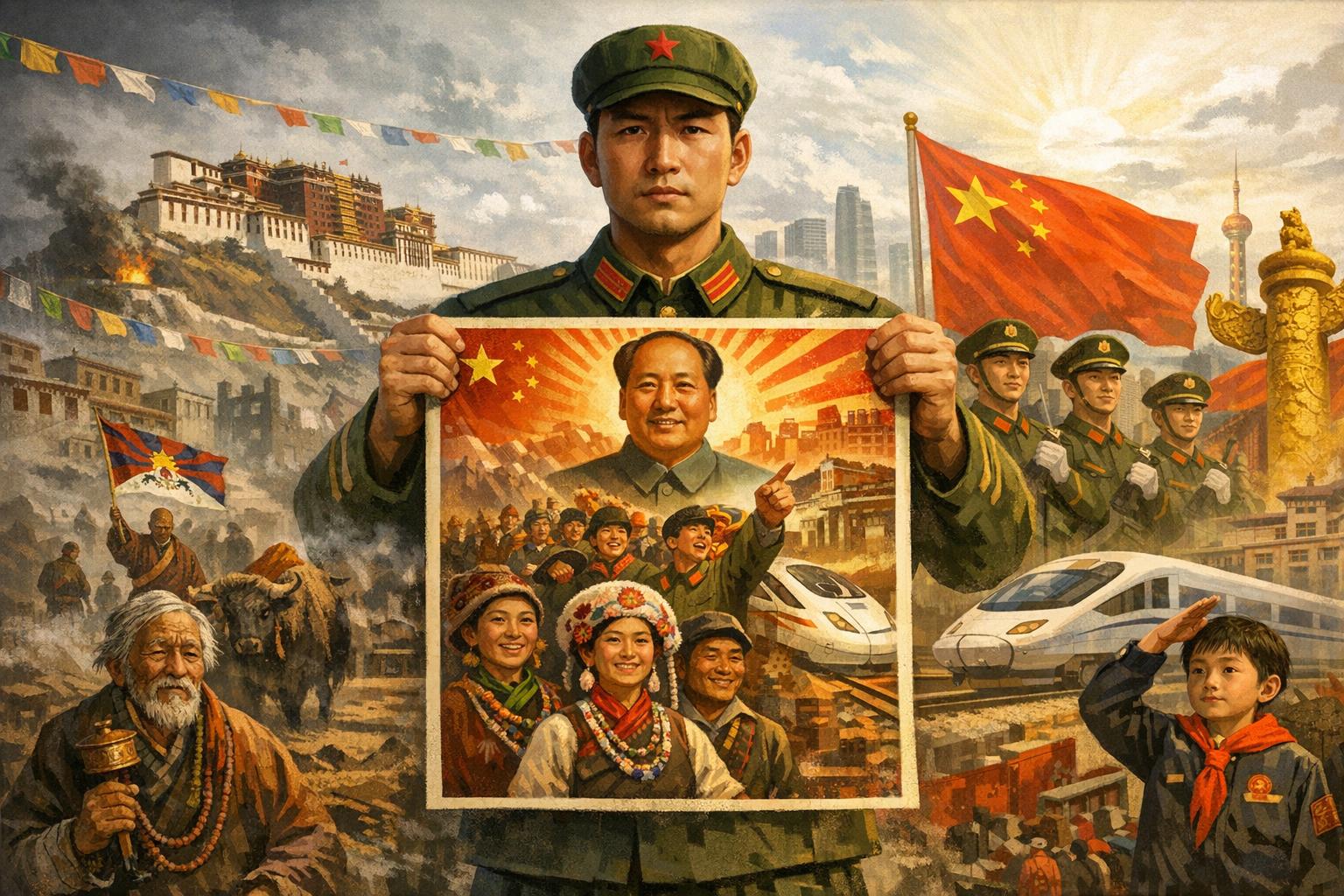
Following the establishment of Chinese control over Tibet in the 1950s, state-led information campaigns were developed to present a consistent account of Tibet’s status. Central to these efforts was the assertion that Tibet had been an integral part of China for centuries. This claim was framed through selective readings of historical events, including references to earlier imperial-era relationships.

The concept of the “peaceful liberation” of Tibet became a foundational element of this narrative. Official accounts portrayed Chinese entry into Tibet as a necessary step to end what was described as a feudal system and to introduce modernization. This framing positioned the Chinese Communist Party as a force of social progress, emphasizing infrastructure development, economic reforms, and expanded access to education and healthcare. At the same time, alternative interpretations—particularly those emphasizing Tibetan autonomy or independence—were characterized as inaccurate or politically motivated.

Control over communication channels allowed the Chinese government to standardize this narrative across multiple platforms. As a result, a coherent version of events was consistently presented to both domestic and international audiences.

Media and Educational Channels

State media has served as a primary vehicle for shaping public understanding of Tibet. Newspapers, television broadcasts, films, and more recently digital platforms have repeated themes of liberation, development, and national unity. Visual imagery often complements these themes, depicting infrastructure projects, urban expansion, and cultural performances that align with state-approved representations of Tibetan life.

Educational systems reinforce these narratives through textbooks and curricula that present Tibet as historically connected to China. These materials typically emphasize political unity while minimizing or reframing periods of Tibetan self-governance. Over time, this approach has contributed to a standardized understanding among Chinese citizens, many of whom have limited exposure to alternative historical interpretations.

Language policy also plays a role. The promotion of Mandarin Chinese in Tibetan regions, alongside the regulation of Tibetan-language instruction, influences how history is taught and understood. While Tibetan language and culture are officially recognized, the structure of education often prioritizes integration into broader national frameworks.

International Influence

Beyond its borders, China has adopted a range of strategies to influence how Tibet is understood globally. Economic partnerships, cultural exchanges, and academic collaborations have provided channels through which China can present its perspective. Research institutions and universities may receive funding for programs that include the study of Tibet, sometimes shaping the direction and emphasis of academic work.

Media engagement is another important dimension. Chinese state media outlets produce content in multiple languages, aiming to reach international audiences with narratives consistent with official positions. In some cases, access to Tibetan regions for foreign journalists and researchers is restricted, which can limit independent reporting and increase reliance on officially sanctioned information.

Diplomatic efforts also contribute to shaping discourse. Governments and international organizations may face political or economic pressure when addressing Tibet-related issues. As a result, public statements and policy positions on Tibet often reflect broader considerations in foreign relations with China.

The Effects on Tibetan Identity

Efforts to define Tibet within a Chinese national framework have implications for cultural and social identity. Official narratives emphasize unity among China’s diverse ethnic groups, including Tibetans, portraying them as part of a shared national community. Policies promoting economic development and infrastructure investment are often presented as benefiting all groups equally, reinforcing this perspective.

At the same time, the preservation of Tibetan cultural practices, language, and religious expression remains a subject of ongoing negotiation. While cultural festivals and certain traditions are supported and publicly displayed, other forms of expression—particularly those linked to political or religious leadership outside state structures—may face restrictions.

These dynamics create a complex environment in which identity is shaped by both state policy and local practices. Many Tibetans continue to maintain distinct cultural traditions, including religious observance centered on Tibetan Buddhism. The interaction between official narratives and lived experience contributes to differing views within Tibetan communities themselves.

Contemporary Repercussions

The differing interpretations of Tibet’s history and status continue to influence present-day developments. Human rights concerns, including issues related to religious freedom, language use, and cultural preservation, are frequently raised by international observers. Chinese authorities, in response, emphasize economic progress and improvements in living standards as evidence of positive governance.

Discussions about Tibet also intersect with broader geopolitical considerations. Countries may weigh human rights concerns against economic and strategic interests when forming their positions. This can lead to cautious or limited engagement on the issue in international forums.

Within China, public discourse on Tibet remains largely aligned with official narratives, though global information flows have introduced some diversity of perspectives. Outside China, academic and policy debates continue to examine historical sources, political developments, and cultural changes in an effort to reach a more comprehensive understanding.

Conclusion

The role of state-led messaging in shaping interpretations of Tibetan history illustrates the broader impact of information control in modern political contexts. By promoting a specific narrative through media, education, and international engagement, the Chinese government has influenced how Tibet is perceived both domestically and abroad. At the same time, alternative perspectives persist, supported by historical research and the experiences of Tibetan communities.

The ongoing discussion reflects the complexity of reconciling differing historical accounts and political viewpoints. Careful examination of sources, awareness of context, and openness to multiple perspectives remain important for analyzing the relationship between Tibet and China.

The role of NGOs in supporting Tibetan refugees.

The Role of NGOs in Supporting Tibetan Refugees

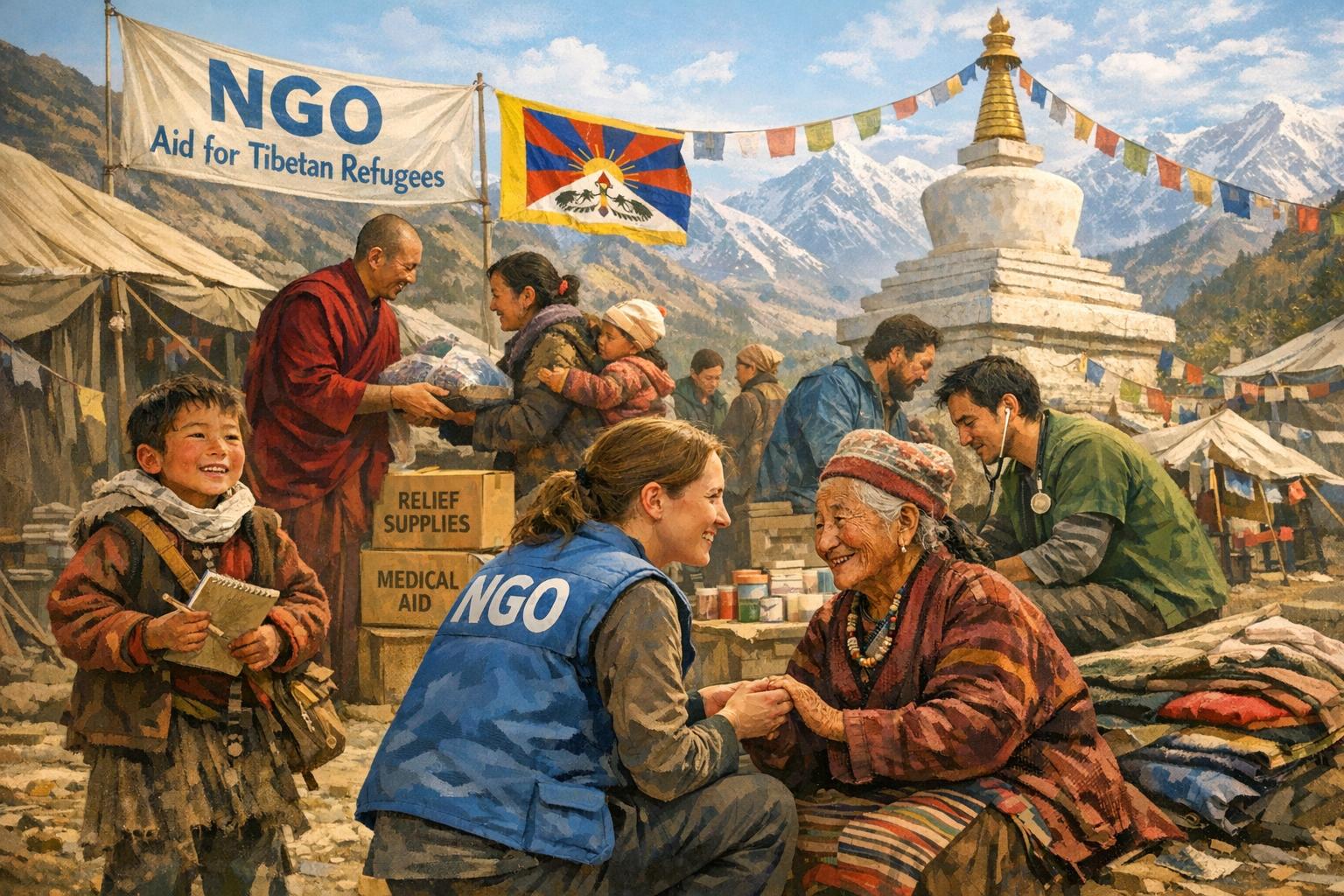
Non-governmental organizations (NGOs) have played a sustained and multifaceted role in supporting Tibetan refugees since large-scale displacement began in the mid-twentieth century. Following the political changes in Tibet after 1950, thousands of Tibetans sought refuge in neighboring countries, particularly India and Nepal. Over time, this displacement evolved into a long-term humanitarian situation requiring organized assistance across multiple sectors. NGOs have contributed by addressing immediate survival needs while also supporting long-term community development, cultural preservation, and institutional resilience.

The involvement of NGOs has often complemented the efforts of host governments and international bodies. Their flexibility, capacity for targeted programming, and close engagement with local communities have allowed them to respond to gaps that larger institutions may not efficiently address. As a result, NGOs have become central actors in improving living conditions and advancing opportunities for Tibetan refugees across generations.

Educational Support

Education has remained a cornerstone of NGO involvement in Tibetan refugee communities. Early interventions focused on establishing basic schooling infrastructure for children who had limited or disrupted access to formal education. Over time, these initiatives expanded into structured educational systems, including primary and secondary schools designed specifically to serve Tibetan populations.

A significant aspect of these educational programs is the integration of cultural and linguistic preservation alongside standard academic curricula. NGOs have supported the development of Tibetan-language instruction, cultural studies, and religious education where appropriate, ensuring that younger generations maintain a connection to their heritage even while living in exile. This dual approach addresses both immediate educational needs and broader concerns about cultural continuity.

In addition to basic education, NGOs have facilitated scholarship programs that allow Tibetan students to pursue higher education in universities both within host countries and abroad. These opportunities have contributed to the development of a professional class within the refugee community, including teachers, healthcare workers, and administrators who often return to serve their communities. Teacher training programs have also been supported, improving education quality and sustainability within Tibetan schools.

Non-formal education has further expanded the reach of NGO programs. Adult literacy initiatives, vocational education, and community-based learning centers have helped individuals who may have missed formal schooling opportunities. These efforts ensure that education is not limited to children but remains accessible throughout the community.

Health and Medical Services

Healthcare provision has been another major area of NGO engagement, particularly due to the geographic distribution of Tibetan refugee settlements, many of which are located in remote or resource-constrained regions. NGOs have established clinics, supported hospitals, and operated mobile health units to address both acute and chronic health issues.

Primary healthcare services often include immunization programs, maternal and child health care, and treatment of common illnesses. Preventative care has been emphasized through health education campaigns focusing on hygiene, nutrition, and early detection of disease. These initiatives are particularly important in densely populated settlements where communicable diseases can spread rapidly.

Mental health has become an increasingly recognized area of need. The experience of displacement, combined with ongoing political uncertainty and economic challenges, has contributed to stress and psychological strain within refugee communities. NGOs have begun to incorporate mental health services into their programs, including counseling, community support groups, and training for local health workers in basic psychological care.

Some organizations also support the integration of traditional Tibetan medicine with modern healthcare practices. Clinics offering traditional treatments operate alongside allopathic services, providing culturally familiar care options while ensuring access to evidence-based medical treatment. This combined approach helps increase trust in healthcare systems and improves overall community engagement.

Infrastructure development has complemented service delivery. NGOs have contributed to building medical facilities, supplying equipment, and training healthcare personnel from within the refugee population. These investments enhance long-term sustainability and reduce reliance on external providers.

Advocacy and Political Support

Beyond service provision, NGOs play a significant role in advocacy related to the rights and conditions of Tibetan refugees. These efforts operate on multiple levels, including international awareness campaigns, policy engagement, and support for Tibetan representation in global forums.

Advocacy initiatives aim to bring attention to issues such as cultural preservation, human rights, and the legal status of refugees. NGOs often work to document conditions, produce reports, and engage with media organizations to ensure that Tibetan concerns remain visible in international discourse. Public events, conferences, and educational outreach programs are commonly used to inform broader audiences.

Policy engagement is another key dimension. NGOs may collaborate with governments and international institutions to influence policies affecting refugee rights, including access to education, healthcare, and employment. In some cases, they assist in navigating legal frameworks related to residency, citizenship, or travel documentation for Tibetan refugees living in host countries.

Support for Tibetan-led institutions is also central to advocacy efforts. NGOs often provide technical and financial assistance to organizations within the Tibetan community, helping them develop governance capacity and participate more effectively in decision-making processes. This approach emphasizes not only external advocacy but also internal empowerment.

While advocacy activities are shaped by political sensitivities, NGOs generally operate within a framework focused on human rights, humanitarian principles, and cultural preservation. Their efforts contribute to maintaining international engagement with Tibetan issues even as geopolitical priorities shift.

Economic Development Initiatives

Economic stability remains a significant concern for many Tibetan refugees, particularly in settlements where opportunities are limited. NGOs have addressed this challenge through a range of economic development programs aimed at increasing self-sufficiency and reducing dependency on aid.

Vocational training programs are a central component of these efforts. Training is often tailored to local market conditions and may include skills such as carpentry, tailoring, agriculture, handicrafts, or service-sector work. These programs are designed to provide practical, income-generating skills that can be applied within or beyond refugee settlements.

Microfinance and small-business support have also gained importance. NGOs may offer small loans, grants, or business training to help individuals start or expand enterprises. These initiatives encourage entrepreneurship and create local economic activity, contributing to broader community development.

Agricultural development programs are particularly relevant in settlements with access to land. Support may include training in sustainable farming practices, provision of tools and seeds, and assistance with irrigation systems. Improving agricultural productivity helps ensure food security while also generating income through surplus production.

Women’s economic participation has been a specific focus within many NGO programs. By supporting women’s cooperatives, skill development, and access to financial resources, these initiatives aim to increase household income and promote greater gender equity within the community.

Efforts to connect refugee economies with external markets have also been explored. NGOs may assist with marketing traditional Tibetan products, improving quality standards, and facilitating distribution channels. This not only supports livelihoods but also reinforces cultural expression through economic activities.

Overall, economic programs are designed with sustainability in mind. Rather than providing short-term assistance, NGOs increasingly emphasize capacity-building and long-term resilience. This approach aligns with broader goals of enabling Tibetan refugees to maintain stable and independent livelihoods while preserving their cultural identity.

Through coordinated efforts in education, healthcare, advocacy, and economic development, NGOs continue to play a central role in supporting Tibetan refugees. Their work addresses immediate humanitarian needs while also contributing to long-term community stability and cultural continuity.