
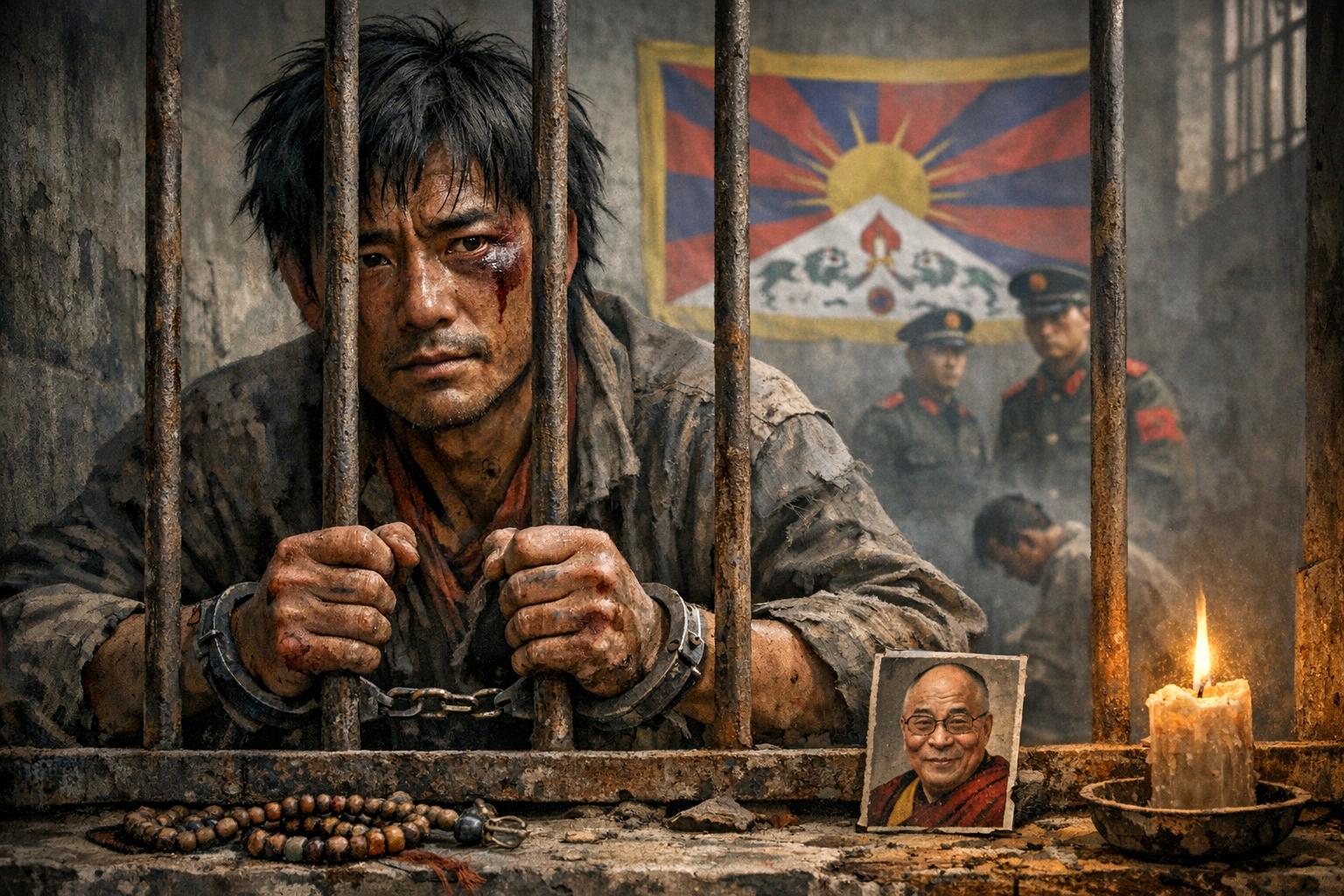
The Plight of Political Prisoners in Tibet
Tibet has long occupied a prominent position in international discussions on human rights, governance, and cultural preservation. Within this broader context, the issue of political prisoners remains one of the most persistent and sensitive areas of concern. Political detention in Tibet is closely tied to questions about sovereignty, identity, and the limits of permissible expression under state authority. While information is often difficult to verify due to restricted access to the region, reports from advocacy groups, former detainees, and researchers suggest that the problem continues to affect a range of individuals, including monks, writers, activists, and ordinary citizens.
The complexity of the issue arises not only from legal and administrative structures but also from the broader political environment in which Tibet operates. This environment shapes how laws are interpreted, enforced, and justified, particularly in cases involving dissent or expressions of cultural autonomy.
Background of Political Imprisonment in Tibet
The roots of political imprisonment in Tibet can be traced to the period following the integration of Tibet into the People’s Republic of China in the 1950s. Since that time, governance policies have aimed to incorporate Tibet more fully into the Chinese state while also managing ethnic, cultural, and religious differences. These policies have often created friction, particularly when expressions of Tibetan identity are perceived as conflicting with national unity.
Over the decades, episodes of unrest, protest, and resistance have influenced how authorities respond to perceived political threats. Periods following demonstrations or public expressions of dissent have typically seen increased surveillance and detentions. Legal frameworks dealing with national security and social stability have been applied in ways that critics argue are broad and open to interpretation.
Political imprisonment in this context is not always limited to formal political activism. Individuals may come under scrutiny for actions that are interpreted as symbolic challenges to state authority, including cultural or religious expressions. This has contributed to a system in which the boundaries between lawful activity and criminal conduct can appear unclear.
Reasons for Imprisonment
The charges used to detain individuals in Tibet often reflect national laws concerning state security and unity. Terms such as “subversion”, “inciting separatism”, and “leaking state secrets” are frequently cited in legal proceedings. While these categories exist in many legal systems, their application in Tibet has drawn scrutiny due to their perceived breadth and flexibility.
Individuals have reportedly been detained for activities including participating in peaceful demonstrations, sharing information with contacts outside the region, or possessing materials related to Tibetan culture and religion that are viewed as politically sensitive. In some cases, even indirect forms of expression, such as songs, writings, or social media posts, have been interpreted as political acts.
Language and cultural preservation efforts can also intersect with legal concerns. Advocacy for the use of the Tibetan language in education or public life has occasionally been framed as resistance to state policy. This creates a situation in which cultural advocacy may carry legal risks depending on how it is interpreted by authorities.
Legal proceedings in such cases may not always be publicly accessible, and reports suggest that defendants can face challenges in obtaining independent legal representation. The lack of transparency contributes to ongoing debates about due process and judicial independence in the region.
Conditions of Detention
Accounts of detention conditions in Tibet vary, but a number of recurring concerns appear in reports from former detainees and human rights observers. Facilities are often described as overcrowded, with limited access to adequate healthcare and nutrition. The physical environment may be basic, and opportunities for communication with family members can be restricted.
A notable feature of detention in politically sensitive cases is the use of re-education or ideological training. These programs are designed to encourage prisoners to align their views with official state positions. Participation may include studying political materials, renouncing previously held beliefs, or demonstrating compliance through written or verbal statements.
Reports have also raised concerns about the use of psychological pressure during interrogation or detention. This may include prolonged questioning, isolation, or other methods intended to secure confessions or compliance. Allegations of physical mistreatment have been reported as well, though independent verification is often difficult due to limited access to detention facilities.
The long-term effects of imprisonment can extend beyond the period of detention itself. Former prisoners may face ongoing surveillance, restrictions on movement, or difficulties securing employment. These outcomes can affect not only individuals but also their families and communities.
International Response
The situation of political prisoners in Tibet has been addressed by various international actors, including governments, non-governmental organizations, and multilateral institutions. Human rights organizations regularly publish reports that document alleged abuses, track specific cases, and call for the release of named individuals.
Diplomatic responses have included public statements, private negotiations, and the raising of individual cases during bilateral discussions. Some governments have incorporated human rights concerns into broader policy frameworks when engaging with China, although the effectiveness of these efforts varies.
International attention is influenced by geopolitical considerations, including economic relationships and strategic priorities. As a result, advocacy efforts often require balancing pressure with engagement. This has led to differing approaches among countries and organizations regarding how best to address the issue.
Despite ongoing attention, tangible changes have been limited. Access to Tibet for independent observers remains restricted, making verification and monitoring challenging. The Chinese government maintains that its policies in Tibet are necessary for stability and development, creating a fundamental difference in perspective between domestic authorities and many external observers.
In this context, the issue of political prisoners remains closely tied to broader questions about governance, legal interpretation, and cultural identity. Addressing it requires not only documentation and advocacy but also sustained dialogue that takes into account the political sensitivities involved.