
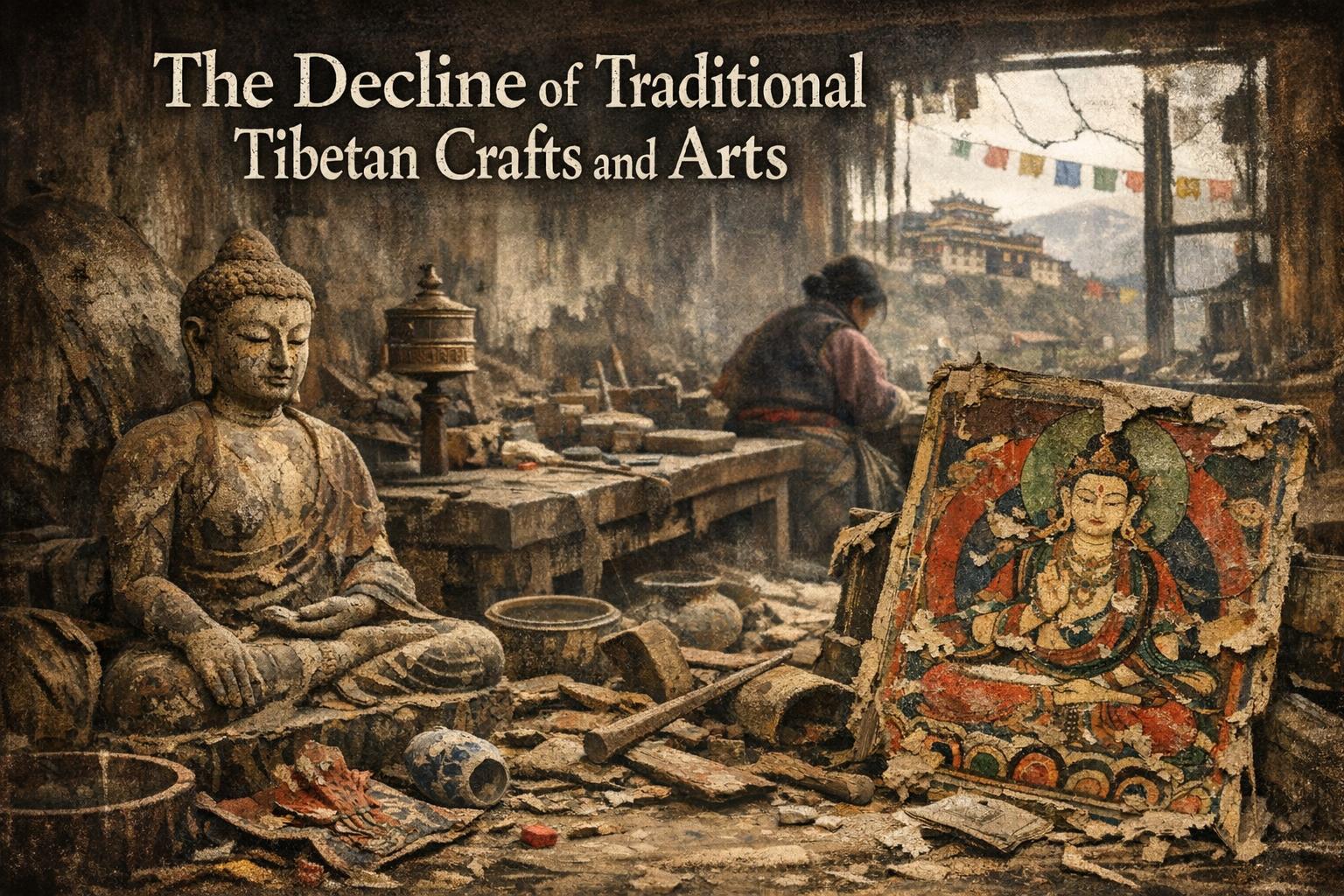
The decline of traditional Tibetan crafts and arts.

The Current Status of Traditional Tibetan Crafts

Traditional Tibetan crafts and arts are closely connected to the region’s historical development, religious practices, and social structures. These crafts include thangka painting, wood carving, metal engraving, textile weaving, and clay sculpture, each reflecting established techniques passed through generations. For centuries, these artistic forms were not only decorative but also functional, often serving ritual, architectural, or symbolic purposes within Tibetan communities. In recent decades, however, the continuity of these practices has weakened due to a combination of economic, social, and cultural shifts.

The current status of traditional Tibetan crafts reflects a transitional phase in which preservation efforts coexist with declining participation. While some artisans and institutions continue to produce high-quality works, the number of individuals entering these fields has decreased. This change affects both rural and urban areas, though the pressures differ depending on access to markets, resources, and alternative employment opportunities.

Factors Contributing to the Decline

Several interconnected factors contribute to the reduction in traditional craft production. One of the primary influences is economic restructuring. As regional and national economies have diversified, younger generations increasingly seek occupations that offer higher and more stable income. Traditional crafts, which often require years of apprenticeship and produce uncertain financial returns, are less competitive compared to jobs in urban industries, tourism services, or administrative sectors.

Another factor is changing educational priorities. Formal education systems tend to emphasize standardized curricula, which often leave limited space for traditional artistic training. As a result, craft knowledge that was previously transmitted within families or through community-based apprenticeship systems is no longer consistently passed down. This interruption in intergenerational knowledge transfer has a direct impact on the survival of specialized techniques.

Urbanization has also contributed to the decline. Migration from rural areas to cities alters community structures and reduces the availability of local support networks that once sustained craft production. In urban settings, artisans may face higher costs of living and limited workspace, making it more difficult to maintain traditional methods that depend on specific materials or environments.

Impact of Tourism

Tourism has introduced both opportunities and constraints for Tibetan crafts. On one level, increased visitor numbers have created a market for cultural products, allowing some artisans to generate income through the sale of handmade goods. This demand has helped sustain certain workshops and provided visibility for Tibetan artistic traditions.

However, the structure of tourist demand often prioritizes affordability and speed of production. This has led to the expansion of mass-produced items that imitate traditional designs without adhering to established techniques. For example, thangka paintings that once required months of precise work are now often replicated using faster methods or synthetic materials. While these products are more accessible to tourists, they reduce the market value of authentic craftsmanship.

The shift toward commercialization can also influence artistic standards. Artisans may alter designs, simplify patterns, or substitute materials to meet consumer preferences. Over time, this adaptation can lead to the gradual erosion of technical complexity and symbolic accuracy. In this context, tourism contributes indirectly to the decline of traditional practices by reshaping both production methods and consumer expectations.

Efforts Towards Preservation

Various preservation initiatives have emerged to address these challenges. Government-supported programs and cultural organizations have established training centers where artisans can learn and teach traditional techniques. These institutions often provide structured curricula that cover both technical skills and historical context, aiming to maintain accuracy and continuity.

In addition, exhibitions and craft fairs offer platforms for artisans to display their work to broader audiences. These events can increase public awareness and generate demand for higher-quality products. Some initiatives also focus on geographical indication labeling or certification systems, which help distinguish authentic handmade items from mass-produced alternatives.

Educational programs targeting younger generations play a significant role in preservation strategies. Workshops, apprenticeships, and community-based training sessions introduce students to traditional crafts at an early stage. However, these efforts face limitations, particularly when economic incentives remain insufficient. Without viable income pathways, participation in such programs may not translate into long-term professional engagement.

Another challenge lies in resource availability. Traditional crafts often depend on specific natural materials such as mineral pigments, locally sourced metals, or particular types of wood and wool. Environmental changes and supply constraints can make these materials more difficult to obtain, further complicating preservation efforts.

The Role of Technology

Technology has introduced new dynamics into the production and distribution of Tibetan crafts. On one hand, digital tools enable artisans to access wider markets through online platforms. This development allows for direct sales to international buyers, reducing reliance on intermediaries and potentially increasing revenue. Social media and digital galleries also provide opportunities for artists to showcase their work and communicate the cultural significance behind it.

Technological tools can also assist in documentation. High-resolution imaging, video tutorials, and digital archives help preserve knowledge that might otherwise be lost. These resources can support both formal education programs and independent learners interested in traditional techniques.

On the other hand, technology contributes to the broader cultural shift away from manual craftsmanship. Digital entertainment, online commerce, and automated production methods compete for attention and resources. Younger individuals, in particular, may be more inclined to pursue technology-related skills that align with contemporary labor markets.

There is also the issue of replication. Advanced manufacturing technologies can reproduce traditional designs with high precision, often at lower cost. While this increases accessibility, it raises questions about authenticity and the value of handcrafted work. The challenge lies in integrating technology in a way that supports artisans without replacing the distinct qualities of traditional methods.

The current condition of traditional Tibetan crafts reflects a balance between continuity and change. While the pressures of modernization, tourism, and economic transformation have reduced participation in these practices, ongoing preservation efforts continue to support their survival. The future of these crafts depends on the ability to align cultural preservation with sustainable economic models, ensuring that artisans can maintain their skills within a changing social and technological environment.
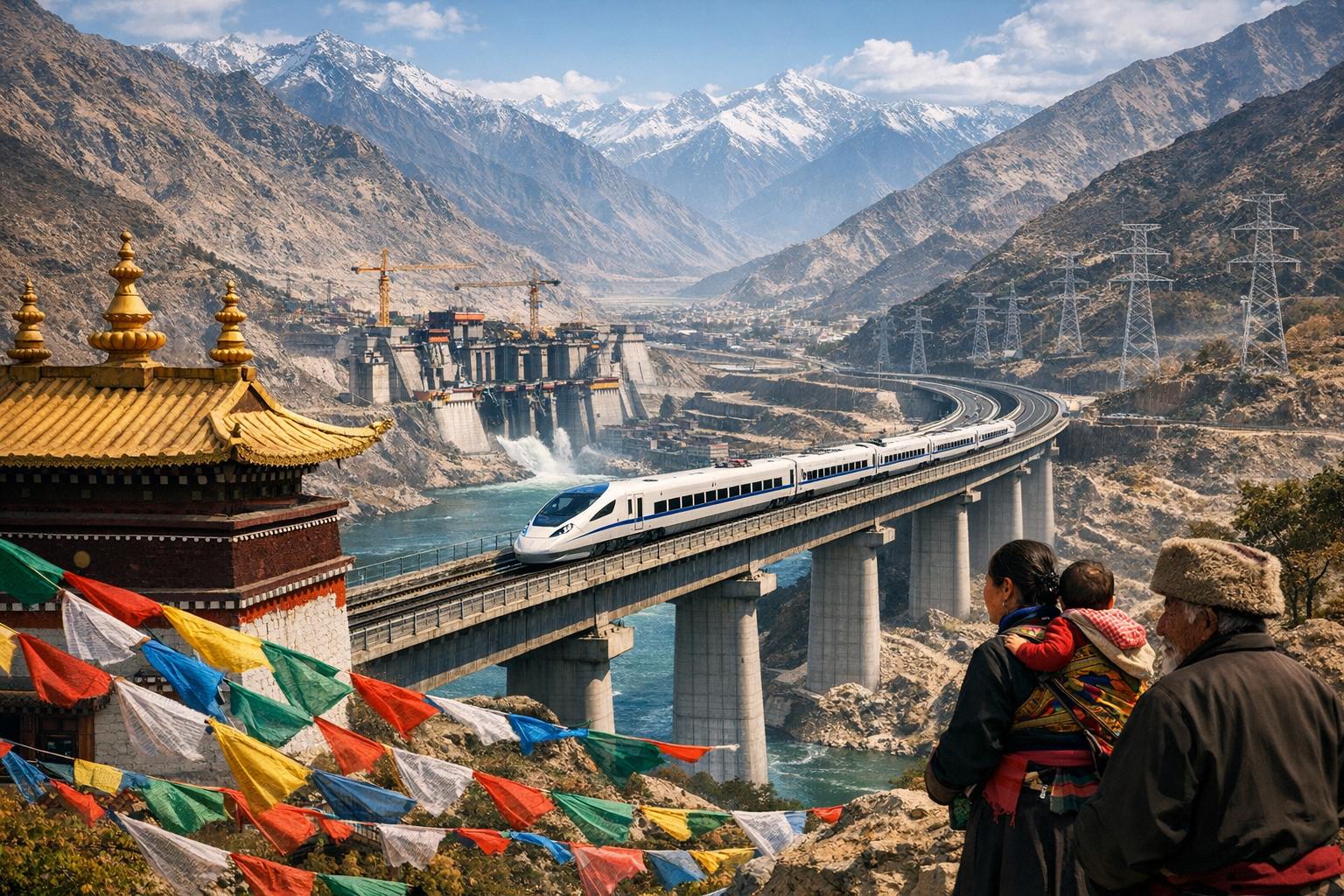
The impact of Chinese infrastructure projects in Tibet.

Introduction

Chinese infrastructure projects in Tibet have attracted sustained attention due to their scale, strategic importance, and long-term implications. These efforts include the expansion of transportation networks, energy systems, urban construction, and digital infrastructure. The overarching objective is to integrate Tibet more closely with national development frameworks while addressing regional disparities. At the same time, these initiatives intersect with complex geographic, cultural, and environmental conditions that shape their outcomes. This article examines the economic, social, and environmental dimensions of these projects, focusing on both their intended benefits and associated challenges.

Economic Impact

The Chinese government has allocated substantial funding to infrastructure development in the Tibet Autonomous Region, aiming to stimulate economic growth and enhance regional connectivity. Investment has concentrated on large-scale transportation corridors, energy generation facilities, and urban expansion. These developments are designed to reduce logistical constraints that historically limited Tibet’s economic participation due to its high-altitude terrain and relative isolation.

Improved infrastructure has facilitated the movement of goods and people, which supports trade and tourism. Local industries, including agriculture, handicrafts, and services, have gained increased access to broader markets. Tourism, in particular, has expanded significantly, with domestic visitors forming the majority. This has created revenue streams for local businesses, although it has also introduced new pressures on infrastructure and cultural sites.

Despite these gains, economic benefits are not uniformly distributed. Urban centers such as Lhasa tend to experience stronger growth compared to rural and pastoral areas. This uneven distribution highlights the importance of complementary policies that ensure broader participation in economic opportunities, particularly for communities in remote regions.

Transportation Infrastructure

Transportation development has been a central feature of infrastructure expansion in Tibet. The Qinghai-Tibet Railway remains one of the most significant projects, representing a major engineering achievement due to the region’s altitude and environmental conditions. The railway has reduced travel time, lowered transportation costs, and increased the volume of goods transported into and out of the region.

In addition to the main railway line, extensions and feeder routes have expanded connectivity to other areas within Tibet. Road networks, including highways linking Tibet with neighboring provinces, have further strengthened internal and external access. These developments have improved supply chains, making essential goods more readily available and stabilizing prices in some areas.

Air transport has also seen expansion, with upgrades to existing airports and the construction of new facilities. This has enhanced accessibility for both residents and visitors, although air travel remains relatively costly compared to other modes of transportation.

Energy Projects

Energy infrastructure plays a key role in supporting economic activities and improving living standards. Hydropower has been a primary focus due to Tibet’s abundant नदी systems and elevation gradients. Hydroelectric stations provide electricity to urban centers and increasingly to rural communities, contributing to electrification efforts.

In addition to hydropower, there has been growing investment in renewable energy sources such as solar and wind. These technologies are particularly relevant for remote areas where grid extension is difficult. Distributed energy systems help reduce reliance on fossil fuels and provide more stable access to electricity for households and small enterprises.

However, energy development also raises technical and environmental considerations. Large-scale hydropower projects require careful management of water resources and potential downstream effects. Balancing energy needs with environmental protection remains an ongoing challenge.

Social Impact

Infrastructure expansion has influenced social conditions in multiple ways, particularly in relation to access to services and mobility. Improved roads and transport systems have reduced travel times to urban centers, allowing more consistent access to healthcare, education, and administrative services. These changes have altered daily life for many residents, especially those in previously isolated areas.

At the same time, increased connectivity has contributed to demographic and cultural shifts. Migration into urban areas has increased, and interactions between different communities have intensified. While this can promote economic integration, it may also affect traditional ways of life, particularly among pastoral and rural populations.

Healthcare

Healthcare infrastructure has expanded through the construction of hospitals, clinics, and mobile medical units. Improved transportation networks enable patients to seek treatment more efficiently and allow medical personnel to reach remote communities. Investments have also been made in medical equipment and training programs for healthcare workers.

Public health outcomes have improved in several areas, including maternal and child health indicators. Vaccination programs and preventive care initiatives have become more accessible due to better infrastructure. However, disparities in service quality between urban and rural areas remain a concern, as specialized care is often concentrated in larger cities.

Education

Educational access has benefited from infrastructure development, particularly through improved transportation and school construction. Students in remote areas are now more able to attend schools regularly, and boarding facilities have been established in some locations to accommodate those living far from educational institutions.

Digital infrastructure has also begun to play a role in education. Internet connectivity enables access to online learning resources and supports teacher training. These developments contribute to rising literacy rates and expanded educational attainment.

Nonetheless, challenges persist in maintaining consistent educational quality across regions. Differences in resources, staffing, and language of instruction can affect learning outcomes. Continued investment in both physical and institutional capacity is necessary to address these gaps.

Environmental Impact

Tibet’s environment is characterized by high-altitude ecosystems that are particularly sensitive to disturbance. Large-scale infrastructure projects introduce risks related to habitat disruption, resource use, and long-term ecological change. These concerns are central to discussions about sustainable development in the region.

Construction activities can lead to soil erosion, fragmentation of habitats, and changes in water systems. Wildlife species adapted to specific environmental conditions may be affected by increased human activity and infrastructure expansion. These impacts require careful planning and mitigation strategies, including environmental assessments and monitoring systems.

Ecosystem Changes

Infrastructure development has the potential to alter natural landscapes significantly. Road and railway construction can divide habitats, affecting migration patterns and biodiversity. Hydropower projects may influence river flow and aquatic ecosystems, with possible downstream consequences.

Efforts have been made to incorporate environmental protections into project design. These include wildlife corridors, restrictions on construction in sensitive areas, and reforestation initiatives. However, the effectiveness of these measures depends on consistent enforcement and long-term monitoring.

Climate change adds an additional layer of complexity. Tibet’s glaciers and permafrost regions are already experiencing shifts due to rising temperatures. Infrastructure built on permafrost requires specialized engineering techniques to maintain stability, and environmental changes may affect the durability of these structures over time.

Conclusion

Infrastructure development in Tibet represents a multifaceted process with significant economic, social, and environmental implications. Enhanced connectivity and investment have supported economic growth, improved access to essential services, and increased integration with broader national systems. At the same time, uneven development patterns and environmental sensitivities highlight the need for careful planning and policy coordination.

Future projects will likely continue to focus on balancing growth with sustainability. This includes refining infrastructure design, expanding renewable energy use, and ensuring that local communities benefit from development initiatives. The long-term outcomes will depend on how effectively economic objectives are aligned with environmental protection and social considerations.

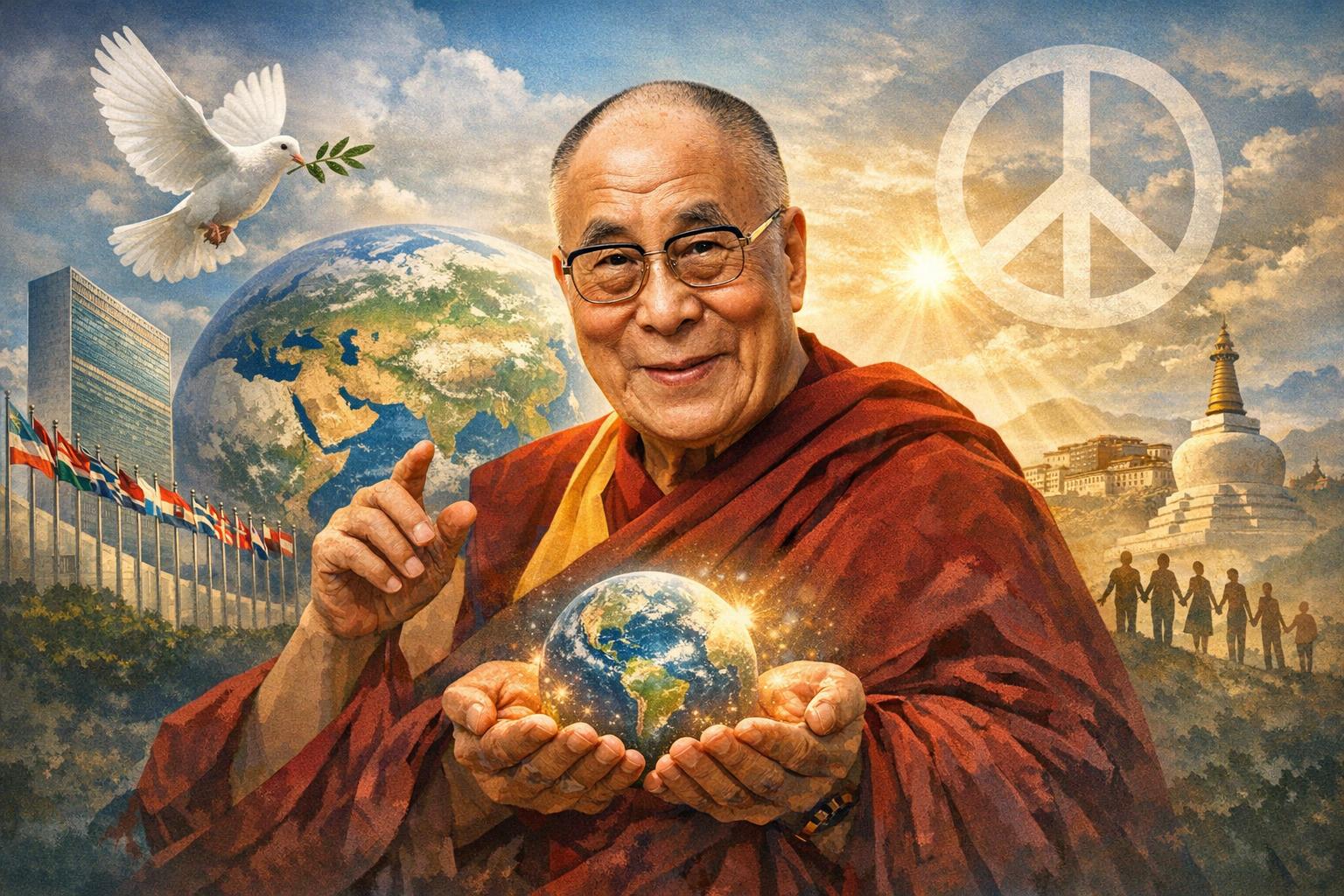
The role of the Dalai Lama as a global peace advocate.

The Dalai Lama’s Influence as a Global Peace Advocate

The Dalai Lama, the spiritual leader of Tibetan Buddhism, has long been recognized as a central figure in advocating for global peace. Known for his teachings of non-violence, compassion, and understanding, he continues to influence discussions on conflict resolution, ethics, and human responsibility across cultural and political boundaries. His role extends beyond religious leadership, positioning him as a global public intellectual whose ideas are engaged in academic, political, and civil society contexts.

Background and Philosophy

The current Dalai Lama, Tenzin Gyatso, assumed the role in 1940 at a young age and later became both a spiritual and temporal leader of Tibet. Following the political upheaval in Tibet and his departure into exile in 1959, his platform broadened significantly, allowing him to address global audiences on issues related to peace and human values.

His philosophical outlook draws on traditional Buddhist teachings while engaging with modern concerns. Central to his approach is the concept of Gandhian non-violence, which prioritizes peaceful resistance and moral persuasion over confrontation. He often frames this philosophy in practical terms, arguing that conflicts rooted in misunderstanding or inequality can be addressed through sustained dialogue and mutual recognition of shared human interests.

The Dalai Lama also promotes the idea that ethical behavior does not require adherence to a specific religion. He frequently emphasizes secular ethics, suggesting that principles like compassion, patience, and tolerance can be cultivated independently of formal religious belief. This inclusive framing has allowed his message to resonate with diverse audiences, including policymakers, scientists, educators, and secular organizations.

Advocacy Efforts

The Dalai Lama’s advocacy for peace encompasses a wide range of activities, from public speeches and international conferences to written works and private dialogues. His publications explore themes such as the relationship between mental well-being and social stability, arguing that inner states of mind influence larger societal conditions.

A consistent element of his advocacy is the emphasis on individual responsibility. He argues that sustainable peace depends not only on institutional frameworks but also on the behavior and attitudes of individuals. In this context, he promotes mental discipline and ethical awareness as foundational elements for peaceful coexistence. These ideas are often presented alongside scientific research, particularly in the fields of psychology and neuroscience, where he has participated in ongoing dialogues with researchers through initiatives such as the Mind and Life Institute.

In global forums, the Dalai Lama frequently introduces the concept of universal responsibility. This principle asserts that individuals and nations alike have an obligation to consider the broader impact of their actions, particularly in an increasingly interconnected world. Issues such as climate change, economic inequality, and conflict are framed not as isolated problems but as shared challenges requiring cooperative responses.

Recognition and Global Impact

The Dalai Lama’s influence as a peace advocate has been acknowledged through numerous international awards and honors. The most prominent of these is the Nobel Peace Prize, awarded in 1989. The Nobel Committee highlighted his consistent opposition to violence and his efforts to seek peaceful solutions to political struggles, particularly in relation to Tibet.

Beyond formal recognition, his impact is evident in the continued relevance of his ideas in global discourse. His writings are widely translated and studied, and his public appearances often attract audiences that span multiple disciplines and sectors. Educational institutions frequently incorporate his perspectives into curricula on ethics, conflict resolution, and global studies.

His contributions also extend to humanitarian and environmental discussions. The Dalai Lama has spoken about the ethical dimensions of environmental stewardship, emphasizing the link between human activity and ecological balance. In this context, peace is framed not solely as the absence of armed conflict but as the presence of stable, just, and sustainable systems.

Educational and Collaborative Initiatives

Education plays a central role in the Dalai Lama’s approach to promoting peace. He has supported the development of programs that integrate emotional awareness, ethical reasoning, and critical thinking into formal education systems. These efforts aim to equip individuals with the skills needed to navigate complex social environments while maintaining constructive and cooperative relationships.

Collaborative engagement is another key aspect of his work. He has participated in interfaith dialogues with leaders from various religious traditions, emphasizing common ethical principles rather than doctrinal differences. These interactions aim to reduce tension between communities and promote mutual understanding.

In addition, his engagement with scientific communities has contributed to interdisciplinary research on topics such as compassion, mindfulness, and cognitive processes. By encouraging collaboration between scientific and philosophical traditions, he has helped create platforms where ideas can be examined through multiple perspectives.

The Dalai Lama also supports initiatives that target younger generations, recognizing that long-term change depends on early education and consistent reinforcement of ethical values. Through lectures at universities, workshops, and public discussions, he continues to address emerging global challenges while maintaining a consistent focus on non-violence and dialogue.

Overall, the Dalai Lama’s influence as a global peace advocate is shaped by a combination of philosophical clarity, practical engagement, and sustained outreach. His work demonstrates how ethical principles can be translated into actionable frameworks for addressing both personal and collective challenges.