
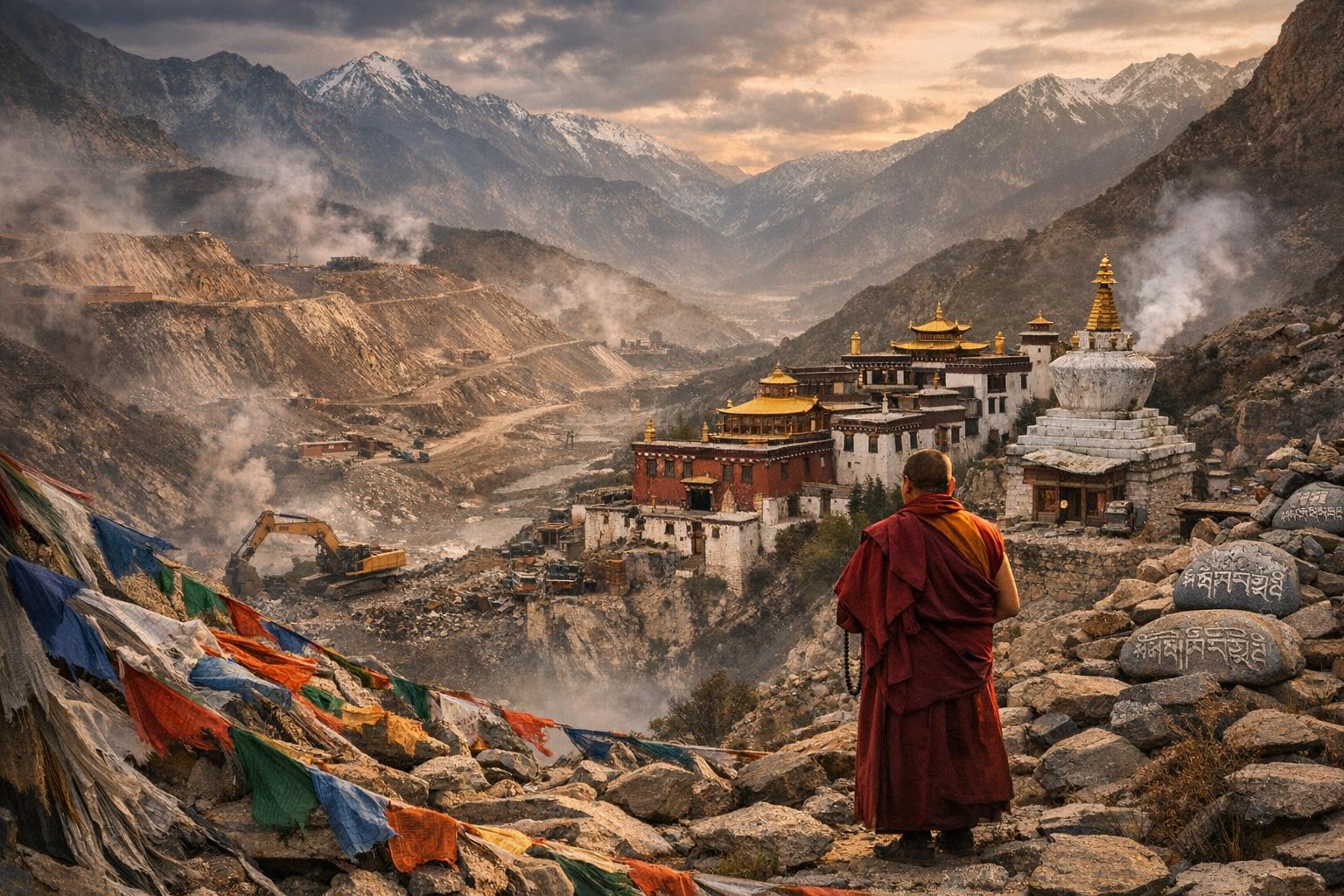
The Importance of Sacred Tibetan Sites
The sacred sites of Tibet hold significant cultural, religious, and historical importance for the Tibetan people and for wider communities interested in Himalayan traditions. Located across a vast plateau framed by the Himalayas, these sites include monasteries, temples, pilgrimage routes, caves, and mountains that have accumulated layers of meaning over centuries. They function not only as destinations for worship but also as centers of education, repositories of artistic expression, and markers of collective identity. Their continued relevance reflects the durability of Tibetan spiritual traditions and the ways in which landscape and belief are closely intertwined.
These locations are embedded within a broader worldview that understands geography as spiritually alive. Mountains, lakes, and valleys are often regarded as manifestations of deities or as sites blessed by revered teachers. As a result, sacred sites are not isolated structures but parts of a wider sacred environment. Ritual practices often extend beyond temple walls to include circumambulation routes, prayer flag installations, and seasonal pilgrimages that engage with the terrain itself.
Cultural and Religious Significance
Tibetan sacred sites play a central role in the preservation and transmission of Tibetan Buddhism, which has shaped the region’s culture for over a thousand years. Monasteries, in particular, function as institutional centers where monks receive training in philosophy, ritual practice, debate, and meditation. These institutions have historically maintained extensive libraries of manuscripts, many of which include commentaries, medical texts, and historical records.
The artistic tradition associated with these sites is also significant. Murals, statues, and ritual objects found within temples reflect a highly developed visual language. Iconography is used to convey complex philosophical ideas, often requiring specialized knowledge to interpret. The production of thangka paintings, sculptures, and mandalas demonstrates continuity in craftsmanship and symbolic representation.
Sacred sites also act as focal points for communal life. Festivals, ceremonies, and public rituals bring together different segments of society, reinforcing shared beliefs and practices. Events such as prayer festivals or commemorations of important religious figures often involve large gatherings and coordinated rituals that highlight the social dimension of religious life.
Examples of Sacred Sites
Among the many sacred locations in Tibet, several stand out due to their historical importance and ongoing relevance. The Jokhang Temple in Lhasa is widely regarded as the most sacred temple in Tibet. It houses the Jowo Shakyamuni statue, which is believed to represent the Buddha during his lifetime. Pilgrims frequently travel long distances to visit this temple, often performing prostrations along the way as part of their spiritual practice.
The Potala Palace, also located in Lhasa, served as the winter residence of successive Dalai Lamas until the 20th century. Architecturally distinctive, it combines religious, administrative, and residential functions. Its scale and design reflect both spiritual symbolism and political authority. The palace contains numerous chapels, shrines, and tomb stupas that commemorate past leaders.
Another major site is Mount Kailash, which holds significance across multiple religious traditions, including Buddhism, Hinduism, Jainism, and Bon. Rather than being climbed, the mountain is revered through circumambulation. Pilgrims undertake a demanding trek around the mountain, believing that completing the circuit brings spiritual merit. This practice illustrates how natural features can serve as central elements in religious observance.
Additional sites include monastic complexes such as Tashilhunpo Monastery and Sera Monastery, as well as sacred lakes like Yamdrok Lake. Each of these locations contributes to a broader network of spiritually significant places.
Challenges Facing Preservation Efforts
Preserving Tibetan sacred sites presents a complex set of challenges that involve environmental, social, and political factors. One major issue is environmental degradation. Increased tourism has led to a rise in infrastructure development, including roads, hotels, and visitor facilities. While these developments may improve access, they can also disrupt fragile ecosystems and alter the visual and cultural integrity of sacred landscapes.
High visitor numbers can place physical strain on ancient structures. Foot traffic, pollution, and inadequate waste management contribute to gradual deterioration. In high-altitude environments, where ecological recovery is slow, even minor disturbances can have long-lasting effects.
Political factors also influence preservation. Administrative control over cultural and religious sites can affect how they are maintained, funded, and used. Regulations related to religious practice, restoration projects, and monastic enrollment have shaped the current condition of many sites. In some cases, modernization initiatives have introduced new construction methods or materials that differ from traditional techniques, raising questions about authenticity and conservation standards.
Another challenge involves the transmission of traditional knowledge. Skilled artisans, such as mural restorers or thangka painters, require years of training. As economic conditions and social priorities change, fewer individuals may pursue these specialized skills, which can affect long-term preservation efforts.
International Support and Initiatives
Efforts to protect Tibetan sacred sites involve a range of stakeholders, including local communities, monastic institutions, and international organizations. Documentation projects have been undertaken to record architectural details, manuscripts, and artworks. Digital archiving has become an important tool, allowing for the preservation of cultural materials that might otherwise be lost.
Some initiatives focus on sustainable tourism practices. These aim to balance accessibility with conservation by promoting responsible visitor behavior and limiting environmental impact. Educational programs also play a role, increasing awareness about the cultural significance of these sites and the importance of preserving them.
Local involvement remains essential. Community-based approaches to preservation often emphasize maintaining traditional practices alongside physical conservation. This includes continued religious use of sites, which helps sustain their original purpose rather than turning them solely into heritage displays.
In conclusion, sacred Tibetan sites represent a convergence of spirituality, culture, and history within a distinctive geographical setting. While they face ongoing challenges from environmental pressures and political dynamics, a combination of local commitment and broader support provides a framework for their continued preservation. Their enduring relevance lies not only in their physical structures but also in the living traditions they support.