
The Current Status of Traditional Tibetan Crafts
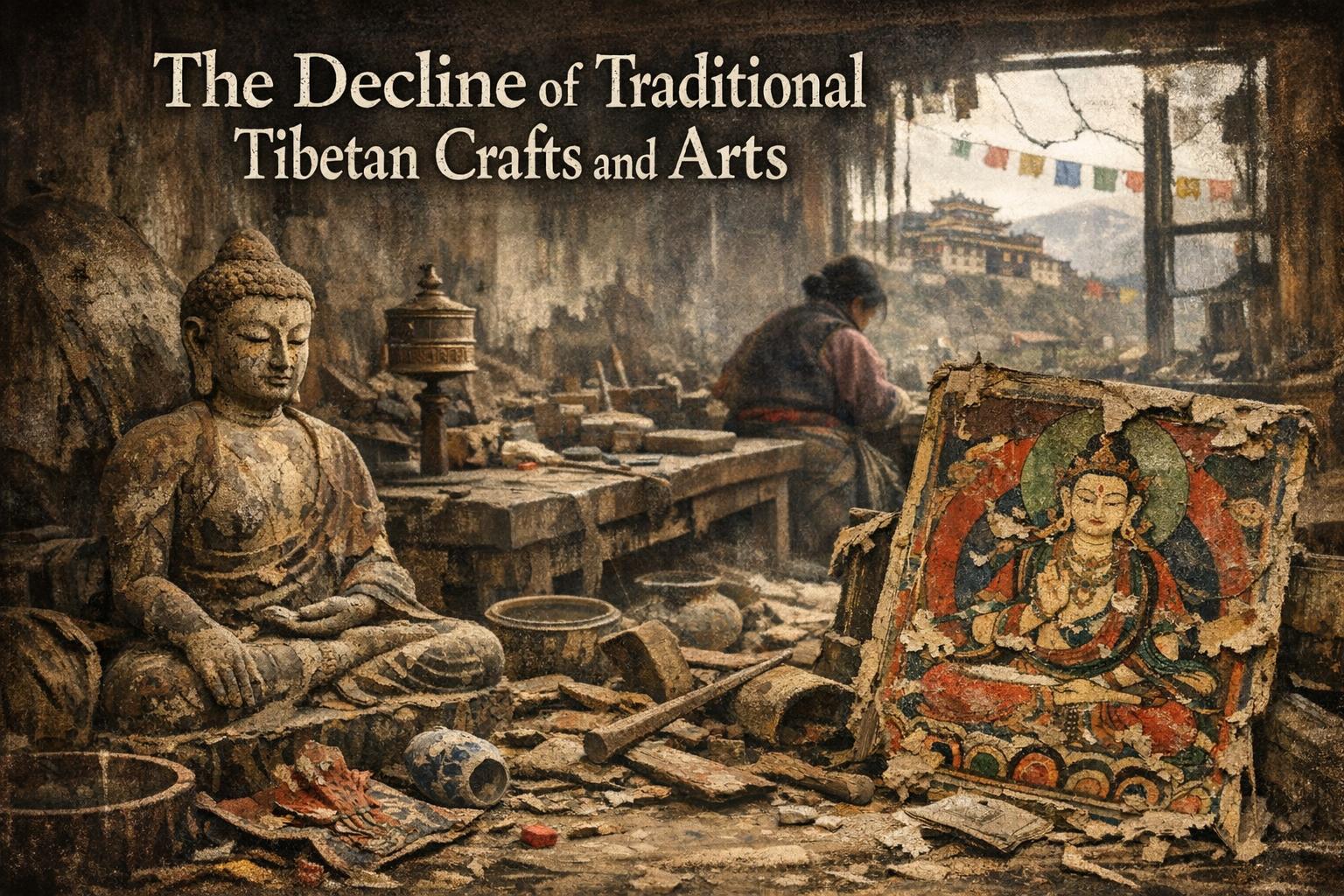
Traditional Tibetan crafts and arts are closely connected to the region’s historical development, religious practices, and social structures. These crafts include thangka painting, wood carving, metal engraving, textile weaving, and clay sculpture, each reflecting established techniques passed through generations. For centuries, these artistic forms were not only decorative but also functional, often serving ritual, architectural, or symbolic purposes within Tibetan communities. In recent decades, however, the continuity of these practices has weakened due to a combination of economic, social, and cultural shifts.
The current status of traditional Tibetan crafts reflects a transitional phase in which preservation efforts coexist with declining participation. While some artisans and institutions continue to produce high-quality works, the number of individuals entering these fields has decreased. This change affects both rural and urban areas, though the pressures differ depending on access to markets, resources, and alternative employment opportunities.
Factors Contributing to the Decline
Several interconnected factors contribute to the reduction in traditional craft production. One of the primary influences is economic restructuring. As regional and national economies have diversified, younger generations increasingly seek occupations that offer higher and more stable income. Traditional crafts, which often require years of apprenticeship and produce uncertain financial returns, are less competitive compared to jobs in urban industries, tourism services, or administrative sectors.
Another factor is changing educational priorities. Formal education systems tend to emphasize standardized curricula, which often leave limited space for traditional artistic training. As a result, craft knowledge that was previously transmitted within families or through community-based apprenticeship systems is no longer consistently passed down. This interruption in intergenerational knowledge transfer has a direct impact on the survival of specialized techniques.
Urbanization has also contributed to the decline. Migration from rural areas to cities alters community structures and reduces the availability of local support networks that once sustained craft production. In urban settings, artisans may face higher costs of living and limited workspace, making it more difficult to maintain traditional methods that depend on specific materials or environments.
Impact of Tourism
Tourism has introduced both opportunities and constraints for Tibetan crafts. On one level, increased visitor numbers have created a market for cultural products, allowing some artisans to generate income through the sale of handmade goods. This demand has helped sustain certain workshops and provided visibility for Tibetan artistic traditions.
However, the structure of tourist demand often prioritizes affordability and speed of production. This has led to the expansion of mass-produced items that imitate traditional designs without adhering to established techniques. For example, thangka paintings that once required months of precise work are now often replicated using faster methods or synthetic materials. While these products are more accessible to tourists, they reduce the market value of authentic craftsmanship.
The shift toward commercialization can also influence artistic standards. Artisans may alter designs, simplify patterns, or substitute materials to meet consumer preferences. Over time, this adaptation can lead to the gradual erosion of technical complexity and symbolic accuracy. In this context, tourism contributes indirectly to the decline of traditional practices by reshaping both production methods and consumer expectations.
Efforts Towards Preservation
Various preservation initiatives have emerged to address these challenges. Government-supported programs and cultural organizations have established training centers where artisans can learn and teach traditional techniques. These institutions often provide structured curricula that cover both technical skills and historical context, aiming to maintain accuracy and continuity.
In addition, exhibitions and craft fairs offer platforms for artisans to display their work to broader audiences. These events can increase public awareness and generate demand for higher-quality products. Some initiatives also focus on geographical indication labeling or certification systems, which help distinguish authentic handmade items from mass-produced alternatives.
Educational programs targeting younger generations play a significant role in preservation strategies. Workshops, apprenticeships, and community-based training sessions introduce students to traditional crafts at an early stage. However, these efforts face limitations, particularly when economic incentives remain insufficient. Without viable income pathways, participation in such programs may not translate into long-term professional engagement.
Another challenge lies in resource availability. Traditional crafts often depend on specific natural materials such as mineral pigments, locally sourced metals, or particular types of wood and wool. Environmental changes and supply constraints can make these materials more difficult to obtain, further complicating preservation efforts.
The Role of Technology
Technology has introduced new dynamics into the production and distribution of Tibetan crafts. On one hand, digital tools enable artisans to access wider markets through online platforms. This development allows for direct sales to international buyers, reducing reliance on intermediaries and potentially increasing revenue. Social media and digital galleries also provide opportunities for artists to showcase their work and communicate the cultural significance behind it.
Technological tools can also assist in documentation. High-resolution imaging, video tutorials, and digital archives help preserve knowledge that might otherwise be lost. These resources can support both formal education programs and independent learners interested in traditional techniques.
On the other hand, technology contributes to the broader cultural shift away from manual craftsmanship. Digital entertainment, online commerce, and automated production methods compete for attention and resources. Younger individuals, in particular, may be more inclined to pursue technology-related skills that align with contemporary labor markets.
There is also the issue of replication. Advanced manufacturing technologies can reproduce traditional designs with high precision, often at lower cost. While this increases accessibility, it raises questions about authenticity and the value of handcrafted work. The challenge lies in integrating technology in a way that supports artisans without replacing the distinct qualities of traditional methods.
The current condition of traditional Tibetan crafts reflects a balance between continuity and change. While the pressures of modernization, tourism, and economic transformation have reduced participation in these practices, ongoing preservation efforts continue to support their survival. The future of these crafts depends on the ability to align cultural preservation with sustainable economic models, ensuring that artisans can maintain their skills within a changing social and technological environment.