
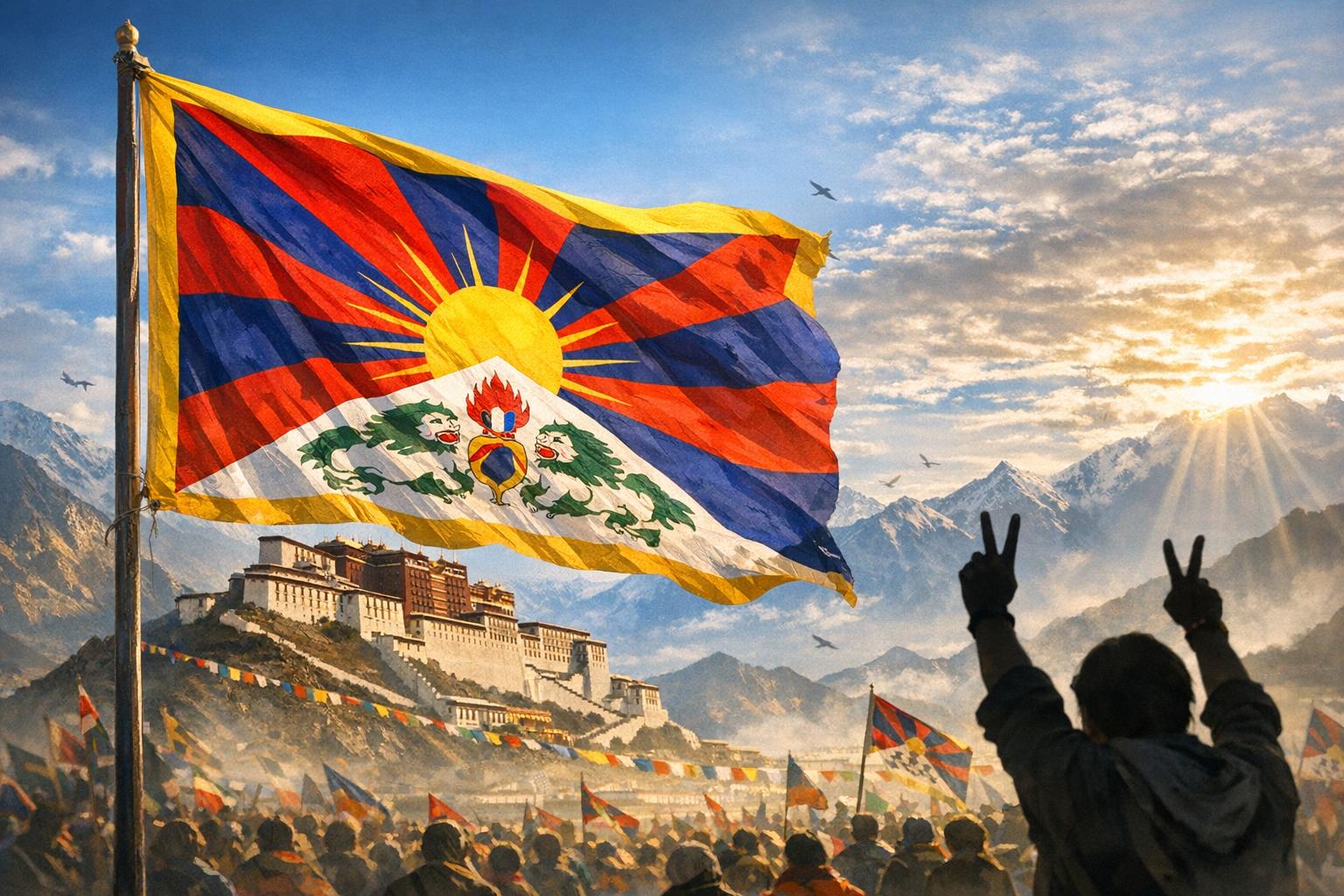
The Tibetan Flag: An Emblem of Freedom
The Tibetan flag is a widely recognized emblem of cultural identity, political aspiration, and historical continuity. For many Tibetans, it represents more than a regional banner; it functions as a visual expression of collective memory and an enduring connection to heritage. Its presence in international discourse reflects ongoing concerns over cultural rights, religious freedom, and political status. While interpretations of its meaning vary depending on perspective, the flag remains a central symbol in discussions about Tibet’s past, present, and future.
Historical Context and Design
The Tibetan flag, often referred to as the Snow Lion Flag, is generally believed to have been introduced in 1912 under the leadership of the 13th Dalai Lama. This period followed the collapse of the Qing dynasty, during which Tibet exercised a degree of independence and sought to modernize aspects of its governance and military. The flag was initially used within official and military settings, signaling emerging state identity and administrative cohesion.
The design reflects both indigenous traditions and influences from neighboring regions. At its center is a prominent mountain, typically interpreted as representing the Tibetan plateau, sometimes called the “Roof of the World.” Flanking the mountain are two snow lions, mythological creatures found in Tibetan folklore, symbolizing strength and dignity. Above them, a rising sun radiates alternating red and blue rays, creating a structured and balanced composition. Each visual component was deliberately selected to communicate philosophical and cultural values associated with Tibetan society.
Symbolism and Meaning
The Tibetan flag is notable for its layered symbolism, with each element carrying specific meaning rooted in religious, cultural, and social traditions. The rising sun is often interpreted as a symbol of enlightenment, suggesting the spread of wisdom and knowledge across the land. Its rays, alternating in red and blue, are commonly associated with the six original tribes of Tibet, signifying unity among diverse groups.
The white triangular mountain at the center represents Tibet’s geographical identity, characterized by high altitudes and a rugged landscape. It also conveys a sense of purity and isolation, qualities often attributed to traditional Tibetan life. The presence of the two snow lions highlights values such as courage, authority, and moral strength. Positioned facing each other, they appear to uphold a flaming jewel, which is typically interpreted as a symbol of spiritual and material wealth.
Color plays an important role in reinforcing the flag’s meaning. Yellow borders are often associated with the flourishing of Buddhist teachings, a cornerstone of Tibetan cultural life. The combination of red and blue rays may also be interpreted as representing the dynamic interaction between spiritual and temporal authority. Together, these visual elements create a cohesive narrative about balance, harmony, and continuity within Tibetan society.
Political Implications
The Tibetan flag’s significance extends beyond cultural symbolism into the realm of politics. Following the incorporation of Tibet into the People’s Republic of China in the mid-20th century, the flag became associated with resistance movements and calls for greater autonomy or independence. As a result, it has been designated as a prohibited symbol in the Tibetan Autonomous Region and in other areas under Chinese administration.
The Chinese government views the flag as linked to separatist activities, and its public display can lead to legal consequences. This position contrasts with how the flag is perceived by many Tibetans in exile, who regard it as a legitimate representation of their historical governance and identity. The divergence in interpretation underscores broader disagreements درباره sovereignty, cultural preservation, and political legitimacy.
In exile communities, particularly those centered around the Central Tibetan Administration in India, the flag retains an official and ceremonial role. It is displayed during public gatherings, cultural events, and political demonstrations. Its use in these contexts reinforces its status as both a unifying emblem and a statement of political position.
International Recognition
Beyond Tibet and China, the Tibetan flag has gained visibility in international contexts, especially within human rights discussions. It is frequently seen at demonstrations, academic forums, and cultural exhibitions that address issues such as religious freedom, minority rights, and political representation. In these settings, the flag often serves as a visual shorthand for broader concerns about cultural preservation and governance.
Governments and international organizations vary in their responses to the flag. Some maintain a position of neutrality due to diplomatic considerations, while others permit or indirectly support its display as part of free expression. Non-governmental organizations and advocacy groups often use the flag to draw attention to specific issues, including language preservation, environmental concerns on the Tibetan plateau, and restrictions on religious practice.
The flag’s international presence has contributed to sustained awareness of Tibetan issues, particularly among diaspora communities and younger generations. Its recognizable design allows it to function effectively in global media and public discourse, where visual symbols often carry significant communicative power.
Efforts for Preservation
Efforts to preserve the Tibetan flag and its associated meanings are closely tied to broader initiatives aimed at maintaining Tibetan culture. In diaspora communities, the flag is integrated into educational programs, cultural festivals, and religious ceremonies. These activities help transmit knowledge about its symbolism to younger generations who may not have direct experience with Tibet itself.
Digital platforms have also become important tools for preservation. Images, historical discussions, and interpretations of the flag circulate widely online, enabling global audiences to engage with its meaning. However, this visibility can also lead to differing interpretations, as audiences apply their own cultural or political frameworks to the symbol.
Within Tibet, preservation is more complex due to legal restrictions. Cultural expression often takes indirect forms, such as art, literature, or oral traditions, where symbolic references may substitute for overt displays. These adaptations illustrate the flexibility of cultural symbols and their ability to persist even under constraint.
The Tibetan flag continues to occupy a distinctive position at the intersection of culture and politics. It functions as both a historical artifact and a contemporary symbol, reflecting evolving interpretations while maintaining core elements of its original design. Its continued relevance suggests that symbols, when deeply embedded in collective identity, retain their significance even as contexts change.
The enduring presence of the Tibetan flag highlights the role of visual representation in shaping and sustaining cultural narratives. Whether viewed as a political statement, a cultural emblem, or a historical artifact, it remains a central point of reference in discussions about Tibet and its people.