
Introduction
Chinese infrastructure projects in Tibet have attracted sustained attention due to their scale, strategic importance, and long-term implications. These efforts include the expansion of transportation networks, energy systems, urban construction, and digital infrastructure. The overarching objective is to integrate Tibet more closely with national development frameworks while addressing regional disparities. At the same time, these initiatives intersect with complex geographic, cultural, and environmental conditions that shape their outcomes. This article examines the economic, social, and environmental dimensions of these projects, focusing on both their intended benefits and associated challenges.
Economic Impact
The Chinese government has allocated substantial funding to infrastructure development in the Tibet Autonomous Region, aiming to stimulate economic growth and enhance regional connectivity. Investment has concentrated on large-scale transportation corridors, energy generation facilities, and urban expansion. These developments are designed to reduce logistical constraints that historically limited Tibet’s economic participation due to its high-altitude terrain and relative isolation.
Improved infrastructure has facilitated the movement of goods and people, which supports trade and tourism. Local industries, including agriculture, handicrafts, and services, have gained increased access to broader markets. Tourism, in particular, has expanded significantly, with domestic visitors forming the majority. This has created revenue streams for local businesses, although it has also introduced new pressures on infrastructure and cultural sites.
Despite these gains, economic benefits are not uniformly distributed. Urban centers such as Lhasa tend to experience stronger growth compared to rural and pastoral areas. This uneven distribution highlights the importance of complementary policies that ensure broader participation in economic opportunities, particularly for communities in remote regions.
Transportation Infrastructure
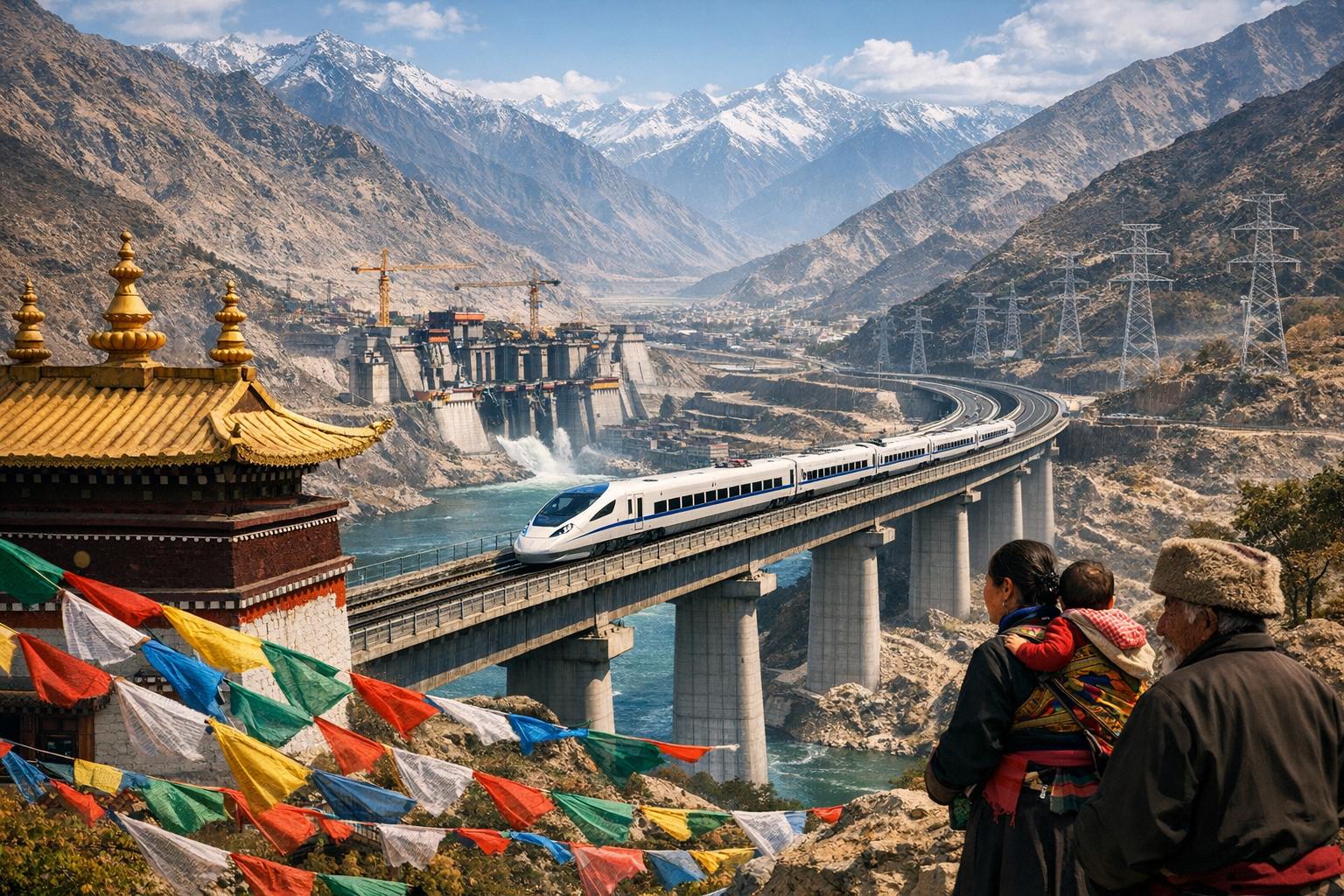
Transportation development has been a central feature of infrastructure expansion in Tibet. The Qinghai-Tibet Railway remains one of the most significant projects, representing a major engineering achievement due to the region’s altitude and environmental conditions. The railway has reduced travel time, lowered transportation costs, and increased the volume of goods transported into and out of the region.
In addition to the main railway line, extensions and feeder routes have expanded connectivity to other areas within Tibet. Road networks, including highways linking Tibet with neighboring provinces, have further strengthened internal and external access. These developments have improved supply chains, making essential goods more readily available and stabilizing prices in some areas.
Air transport has also seen expansion, with upgrades to existing airports and the construction of new facilities. This has enhanced accessibility for both residents and visitors, although air travel remains relatively costly compared to other modes of transportation.
Energy Projects
Energy infrastructure plays a key role in supporting economic activities and improving living standards. Hydropower has been a primary focus due to Tibet’s abundant नदी systems and elevation gradients. Hydroelectric stations provide electricity to urban centers and increasingly to rural communities, contributing to electrification efforts.
In addition to hydropower, there has been growing investment in renewable energy sources such as solar and wind. These technologies are particularly relevant for remote areas where grid extension is difficult. Distributed energy systems help reduce reliance on fossil fuels and provide more stable access to electricity for households and small enterprises.
However, energy development also raises technical and environmental considerations. Large-scale hydropower projects require careful management of water resources and potential downstream effects. Balancing energy needs with environmental protection remains an ongoing challenge.
Social Impact
Infrastructure expansion has influenced social conditions in multiple ways, particularly in relation to access to services and mobility. Improved roads and transport systems have reduced travel times to urban centers, allowing more consistent access to healthcare, education, and administrative services. These changes have altered daily life for many residents, especially those in previously isolated areas.
At the same time, increased connectivity has contributed to demographic and cultural shifts. Migration into urban areas has increased, and interactions between different communities have intensified. While this can promote economic integration, it may also affect traditional ways of life, particularly among pastoral and rural populations.
Healthcare
Healthcare infrastructure has expanded through the construction of hospitals, clinics, and mobile medical units. Improved transportation networks enable patients to seek treatment more efficiently and allow medical personnel to reach remote communities. Investments have also been made in medical equipment and training programs for healthcare workers.
Public health outcomes have improved in several areas, including maternal and child health indicators. Vaccination programs and preventive care initiatives have become more accessible due to better infrastructure. However, disparities in service quality between urban and rural areas remain a concern, as specialized care is often concentrated in larger cities.
Education
Educational access has benefited from infrastructure development, particularly through improved transportation and school construction. Students in remote areas are now more able to attend schools regularly, and boarding facilities have been established in some locations to accommodate those living far from educational institutions.
Digital infrastructure has also begun to play a role in education. Internet connectivity enables access to online learning resources and supports teacher training. These developments contribute to rising literacy rates and expanded educational attainment.
Nonetheless, challenges persist in maintaining consistent educational quality across regions. Differences in resources, staffing, and language of instruction can affect learning outcomes. Continued investment in both physical and institutional capacity is necessary to address these gaps.
Environmental Impact
Tibet’s environment is characterized by high-altitude ecosystems that are particularly sensitive to disturbance. Large-scale infrastructure projects introduce risks related to habitat disruption, resource use, and long-term ecological change. These concerns are central to discussions about sustainable development in the region.
Construction activities can lead to soil erosion, fragmentation of habitats, and changes in water systems. Wildlife species adapted to specific environmental conditions may be affected by increased human activity and infrastructure expansion. These impacts require careful planning and mitigation strategies, including environmental assessments and monitoring systems.
Ecosystem Changes
Infrastructure development has the potential to alter natural landscapes significantly. Road and railway construction can divide habitats, affecting migration patterns and biodiversity. Hydropower projects may influence river flow and aquatic ecosystems, with possible downstream consequences.
Efforts have been made to incorporate environmental protections into project design. These include wildlife corridors, restrictions on construction in sensitive areas, and reforestation initiatives. However, the effectiveness of these measures depends on consistent enforcement and long-term monitoring.
Climate change adds an additional layer of complexity. Tibet’s glaciers and permafrost regions are already experiencing shifts due to rising temperatures. Infrastructure built on permafrost requires specialized engineering techniques to maintain stability, and environmental changes may affect the durability of these structures over time.
Conclusion
Infrastructure development in Tibet represents a multifaceted process with significant economic, social, and environmental implications. Enhanced connectivity and investment have supported economic growth, improved access to essential services, and increased integration with broader national systems. At the same time, uneven development patterns and environmental sensitivities highlight the need for careful planning and policy coordination.
Future projects will likely continue to focus on balancing growth with sustainability. This includes refining infrastructure design, expanding renewable energy use, and ensuring that local communities benefit from development initiatives. The long-term outcomes will depend on how effectively economic objectives are aligned with environmental protection and social considerations.