
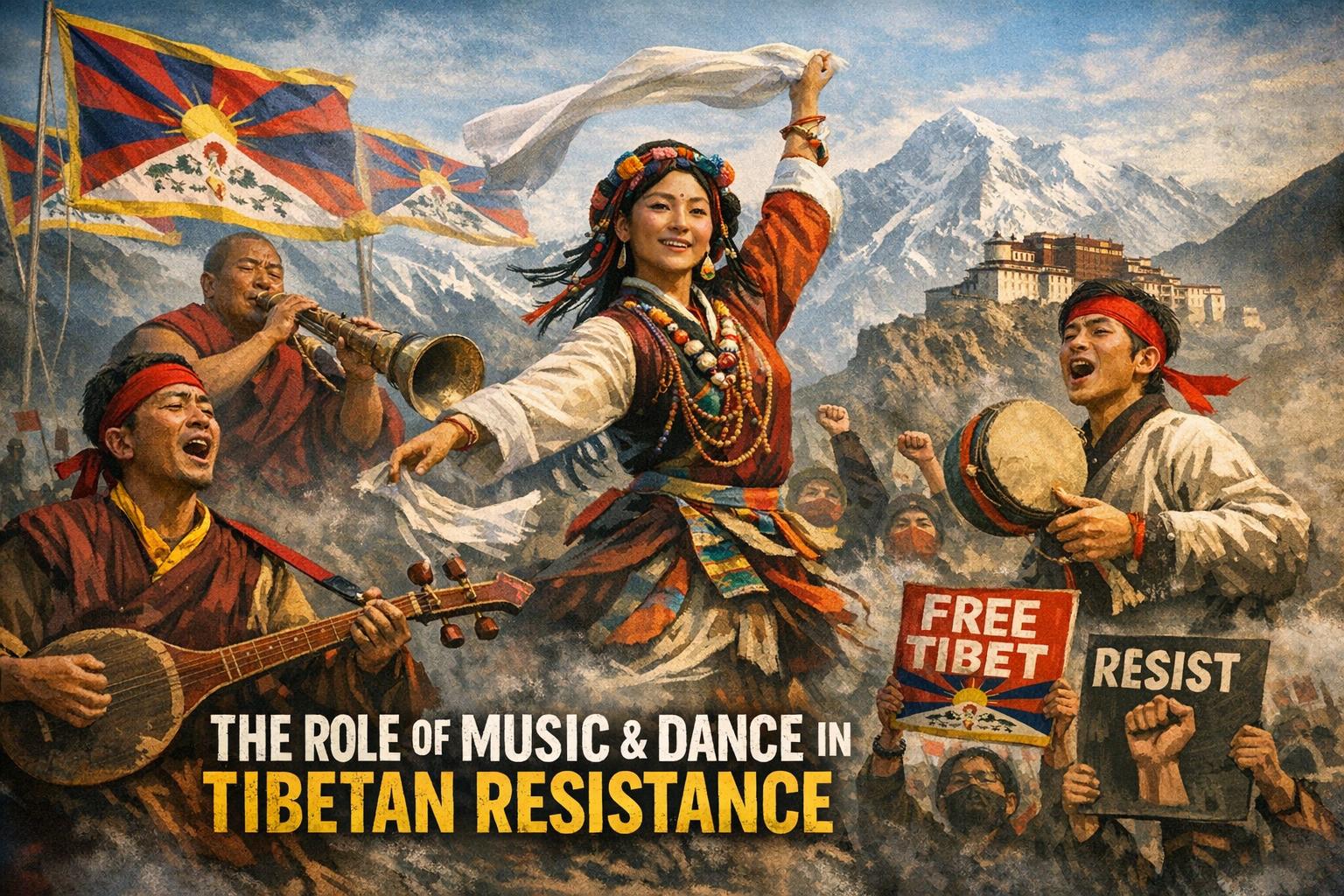
The Role of Music in Tibetan Resistance
Music has served as a significant component of Tibetan resistance, reflecting the socio-political struggles of the Tibetan people across decades of change. Tibetan musical traditions, shaped by religious practice, oral storytelling, and regional diversity, offer a framework through which identity can be maintained and expressed. In contexts where political expression is restricted, music often becomes an indirect but effective medium for communicating collective concerns. Lyrics, melodies, and performance styles carry layered meanings that resonate with shared historical experiences.
Tibetan music frequently incorporates traditional elements not only for cultural preservation but also as a subtle mechanism of resistance. Songs may emphasize themes such as homeland, continuity, and spiritual belonging, which reinforce a sense of shared identity. While not always overtly political, these themes can function as coded expressions of dissent. The repetition of motifs tied to landscape, language, and memory reinforces connections that transcend immediate political constraints.
Traditional Tibetan instruments such as the dranyen, a lute-like string instrument, and the gyaling, a reed woodwind instrument used in ceremonial contexts, are often featured in these compositions. Their distinctive sounds anchor contemporary works in older traditions, providing continuity between generations. Rhythmic structures and melodic patterns frequently draw from ancient musical forms, ensuring that even newly composed songs retain recognizable cultural features. This blending of historical and contemporary elements allows music to act as both preservation and adaptation.
In addition to instrumentation, vocal style plays an important role. Tibetan singing often involves sustained tones and ornamentation that reflect regional styles. These techniques contribute to a recognizable soundscape that listeners associate with Tibetan identity. As a result, even instrumental or abstract compositions can evoke a sense of belonging and collective memory.
The Impact of Musical Artists
Contemporary Tibetan musicians have expanded the role of music by incorporating modern genres such as pop, rock, and hip-hop into their work. This fusion allows artists to reach younger audiences while maintaining ties to traditional forms. By adapting global musical styles, Tibetan musicians can present their messages in formats that travel more easily across borders.
Many artists operate under conditions that impose limitations on creative expression. Censorship, surveillance, and restrictions on performance can shape both the content and distribution of their work. Some musicians choose to use metaphor and symbolism to navigate these constraints, embedding complex messages within seemingly apolitical lyrics. Others work from exile communities, where they have greater freedom to address political issues more directly.
Despite these challenges, Tibetan musicians have gained international attention. Recordings, live performances, and digital platforms allow their work to circulate beyond local contexts. This broader dissemination contributes to raising awareness about Tibetan cultural and political concerns. International collaborations with artists from other regions further amplify this reach, creating cross-cultural exchanges that contextualize Tibetan experiences within global discussions of identity and self-determination.
At the same time, international visibility introduces certain complications. The expectations of global audiences can influence how Tibetan music is presented, sometimes emphasizing particular narratives over others. Artists must balance authenticity with accessibility, ensuring that their work remains grounded while engaging diverse listeners.
The Integral Role of Dance
Dance is another crucial element in Tibetan resistance, functioning as a visible and embodied form of cultural expression. Unlike music, which can circulate through recordings alone, dance relies on physical presence and communal participation. This makes it particularly significant in maintaining traditions within communities, especially in diasporic settings.
Traditional Tibetan dances often depict historical events, religious symbolism, and stories drawn from oral traditions. Movements, costumes, and spatial arrangements all carry meaning. For example, circular group formations may symbolize unity, while specific gestures can reference mythological narratives or spiritual concepts. These elements transform dance into a form of storytelling that communicates layers of cultural knowledge.
Dance also provides a structured setting in which intergenerational transmission can occur. Younger participants learn choreography alongside the cultural context that informs it. This process reinforces continuity and ensures that traditions are not reduced to static displays but remain integrated within lived experience.
Cultural Preservation Through Dance
In contexts where cultural assimilation poses a risk, organized dance groups play an essential role in maintaining Tibetan heritage. Community centers, schools, and cultural organizations often host dance programs that teach traditional forms in systematic ways. These programs not only preserve choreography but also maintain associated music, costume design, and linguistic elements.
Performances often coincide with festivals and commemorative events, where they serve as collective affirmations of identity. Such gatherings provide opportunities for dispersed communities to reconnect and reinforce shared cultural frameworks. The act of performing, whether for internal audiences or external observers, reinforces the legitimacy and continuity of Tibetan traditions.
In exile communities, dance can also serve as an anchor for identity among younger generations who may not have direct experience of Tibet itself. Through participation, they engage with a cultural heritage that might otherwise feel distant. This engagement helps prevent cultural erosion over time.
Performative Resistance
Dance performances are not merely cultural exhibitions; they often carry implicit or explicit references to resistance. Choreography and thematic framing can highlight historical loss, aspiration for autonomy, or the persistence of cultural identity under pressure. Even when performances adhere strictly to traditional forms, their continued existence in contested contexts can itself be interpreted as a statement.
Costuming and staging further reinforce these messages. Traditional attire, often rich in symbolic detail, signals continuity with past generations. The deliberate preservation of these visual elements asserts the ongoing relevance of Tibetan cultural identity. In some performances, narrative introductions or spoken components provide contextual framing that links traditional content with contemporary circumstances.
The concept of performative resistance emerges from this combination of continuity and adaptation. By maintaining established forms while situating them within present-day realities, dancers create a layered expression of identity that operates across cultural and political dimensions.
Global Connection
Tibetan music and dance have reached international audiences through festivals, cultural exchanges, and digital media. These platforms enable Tibetan performers to present their traditions to diverse audiences, contributing to broader awareness. Cultural festivals dedicated to Himalayan or Tibetan traditions often feature both music and dance, offering integrated presentations of artistic practice.
International exposure also facilitates dialogue. Audience members unfamiliar with Tibetan history or culture gain entry points through artistic expression. While performances alone do not provide comprehensive political analysis, they can prompt further engagement and inquiry. In this sense, music and dance function as introductory frameworks for understanding more complex issues.
At the same time, global circulation changes how these arts are perceived. Performances may be adapted to suit stage conditions or audience expectations, sometimes leading to modifications in duration, structure, or emphasis. These adaptations reflect practical considerations rather than a departure from core traditions.
Ultimately, music and dance remain integral to Tibetan resistance by sustaining cultural identity while enabling communication across boundaries. They operate simultaneously as artistic practices, educational tools, and forms of expression embedded in broader social contexts. Through continuity and adaptation, these mediums continue to articulate shared experiences and maintain connections between past, present, and future.